Xanadu Books Interview

I enjoy interviews (hint to any readers in that business) and had fun working with Xanadu Book Awards & Press. Their approach concentrates on a writer’s motivation and personal resources. To my experience, writers can be very different. Especially creative writers who think outside the formula.

Aliens Among Us

My short story “Aliens Among Us” will appear in the animal story anthology THE DOG WHO WOOED THE WORLD to be published on 30 May. My point in the story is that sentient ‘alien’ intelligence surrounds us on this planet. My story includes three real alien encounters.

Screenshot

The Starflower

This has been a great year for “Strange Things Done”.

Several of my short stories have been published, four this year, my best year. And Austin Macauley Publishers informs me that advanced copies of my SF novel THE STARFLOWER are available in soft back now on their site: https://www.austinmacauley.com/us/book/starflower

The official publishing date is 18 August 2023. The Epub and audio should be available at other sites shortly.

The Starflower

“What I Played for Love”

Another of my short stories was published at the end of June. That makes three this year—a personal record. In “What I Played for Love” an older man smitten by a younger woman fails to read his contract and gets taken. Dark Horses: the Magazine of Weird Fiction No. 18 is only in hard copy and is available on Amazon:

Amazon.com: Dark Horses: The Magazine of Weird Fiction No. 18: July 2023 (Dark Horses Magazine) eBook : Spitzer, Wayne Kyle, Watson, Stuart , Lang, Noah , Bondies, Michael , McGlyn, Jessica , Franks, Lillie E. , Sumner, Tiffany, Gielo, Bob , Harper, James , Kenny, K.A. : Kindle Store

Second Chance – A Bewildering Story

Bewildering Stories welcomed me as one of their authors and gave me my first publication for 2023. “Second Chance” began as a character study with no redeeming characters. Kip told me what happened in an interview.

Kip a criminal serving time collecting trash in space is given an opportunity to mend his ways…or not. See the story by K.A. Kenny.
http://www.bewilderingstories.com/issue987/

The Parable of the Three Sailors

Kalon Kuday took his seat in the market square just as he did every week. After the children gathered, he told them a story. “Three men went down to the sea to sail,” he began.

The first man walked to his boat and climbed in. While he waited for someone to untie the lines and push him off, the man’s gaze never left the horizon. A breeze filled the sail and carried the man and his boat out from shore and onto a calm sea. The breeze remained at his back and shifted occasionally, also shifting the sail, so the man had no need to touch either the sail or the tiller. A short while later, the man found himself across the sea, entering a safe harbor, and lined up with a berth. A cheering crowd greeted him, tied his boat securely, and helped him ashore.

The second man, before untying his boat, studied the rigging of the sail and motion of the rudder. He then stepped aboard and, when others came to advise and help him, he thanked them. By this time, the gentle breeze had grown brisk and unsteady, and clouds gathered. Leaving the harbor required the man to steer and adjust the sail. Shifting wind and waves demanded constant adjustment to remain afloat and on course. No one noticed when he entered the far harbor, stepped onto the pier, and tied his boat.

In no hurry, the third man inhaled the sea air, felt the breeze pick up, and watched the clouds gather. When people onshore said it had gotten late and a storm was coming, he scowled and waved them back. As if to prove them wrong, and with no preparation, he took his place in the boat. The untrimmed sail snapped and swung; the lashed tiller remained immobile. When no one came to help, the man shouted, waved a fist, and cut the bow and stern lines. The misaligned sail folded in the wind and the boat spun, forcing the man to row in order to leave the harbor. The boat drifted and rocked, moving forward only when a wind shift caught the sail just right. When waves flooded the boat, the man cursed at his fate bailed water with a bucket. After many days, the boat grounded on a reef, and the man washed ashore. Locals to this day recount the odd man swearing and blaming everyone for his misfortune.

Kalon Kuday rested his hands on his crossed legs. The children waited for his first question.

“Which of the three men was most successful?”

Radib had his answer ready. “Easy. The first one, because he crossed the sea and didn’t have to work much.”

Anik agreed. “And everyone cheered when they saw him.” He paused. “And now everyone knows him so he can be the King.”

Tima shook her head. “The second man learned how to sail, so he did the most, and he’s the smartest.”

Anik protested. “But nobody saw him, so he didn’t get any credit, and his trip was wasted.”

Kalon Kuday stroked his thin mustache. “And which of the three would you say got what he wanted most?”

“The third man didn’t, but the other two did.” Tima bobbed her head.

A wide-eyed girl sitting in front spoke up. “No, everyone got just what they wanted.” Kalon Kuday smiled down at little Sibanya.

Radib frowned at his sister. “All the third man got was angry.”Sibanya held up her chin. “That was what he wanted—to be angry at everyone all the time. All three men got what they wanted most.”

When Aliens Tried to Help

“What ya doin’ now?” Justin asked.

“Same as eight minutes ago … making friends.” Greg’s eyes darted as his fingers skipped over his lap device.

Justin peered over Greg’s arm. “How many friends you got now?”

“A lot … five … six … seven … since morning I’ve added two thousand, two hundred and seven … eight … nine …” Greg clicked down the accept list.

Justin threw his arms out and flopped back in his chair. “Wow! You’re the most popular guy I know.”

“Don’t say guy, someone might take it the wrong way.”

“Sorry. You ever gonna meet any of your new friends?” Justin asked. Greg shook his head. “Not even the girls? Girls really go for popular guys, I hear. Makes ‘em get all … you know … like … ahh, excited.”

Greg faked a yawn. “Since when? Girls get all their fantasy characters online, avatars wayyy cooler than me. That way they get to play like they’re magical princesses and don’t even have to comb their hair.”

“I thought it was just me they didn’t like,” Justin said and grimaced.

“Been that way ever since the world got perfect. Who wants normal dudes? Too much work.” Greg shrugged, and Justine went back to clicking.


The galactic overseers watched the scene as they rocked in silence in the mist of the saline hearth. When the monitor darkened, Otch turned to Cot. “You see what we’re up against? That was years ago. We didn’t do anything then, and it’s gotten much worse.”

Cot did not respond and continued waving its many eyestalks in the warm, briny mist. Then it casually lifted a slark worm from the hors d’hoeuvre tray and proceeded to sip extrusion from its shell.

Otch pressed. “Tell me, Cot, how are your humans doing?”

Cot paused only an instant then returned to slark-surping.

Too direct, Otch thought. Cot was sensitive about discussing its humans. Every conversation they’d had on the topic had ended with an argument. Otch retracted its eyestalks, biding its time while Cot ate.

When the last of the slark disappeared from the tray, Otch tried again. “I’m sorry Cot, but I must persist. As you saw on the monitor, my humans are failing to thrive. I don’t know what’s wrong with them. I’ve done everything to make them happy, given them everything they’ve asked for, and yet they’re dying. Humans don’t know they’re no longer on Earth, but the problems began right after the relocation …” No response. Otch knew what Cot wanted.

“Okay, I apologize,” Ocht said. “I admit, you may have been right about the humans. And I was wrong to side against you in the relocation meeting.”

“You laughed at me,” Cot finally said, its tendrils oscillating.

“I’m sorry for that, too.”

“Then you voted to have my opinions struck from the record.”

“And that, too. But listen, Cot. Nothing is working. The new habitats are identical to the ones humans had on Earth. We just removed the obstacles and smoothed the rough edges—diseases, poor climate, shortages. We made everything perfect for them. Abundant delectable foods, lavish entertainments, rewards for every act, complete safety. We know we missed something. I’m down to a few dozen females, no males. Justin and Greg are gone. When females showed no interest in them, the males kicked around for a while then just stopped living.” Cot nodded as if this should have been expected.

“We want you back on the team,” Otch said. Cot nodded and, after a beat, Ocht asked again, “So how are your humans doing?”

“I’ve got twelve hundred and thirteen,” Cot said quietly.

“No, that’s not possible,” Ocht said, his voice rising in disbelief. “That would mean an increase. Are you saying your population has grown?” Cot nodded. “What? You’ve found some new entertainment for them … some new drug?”

“We’ve had this discussion before, and I won’t go through it again. You and the relocation team only want to hear answers that support your thinking.” When Ocht began to protest, Cot held up a dozen tendrils. “I think we’re done here. Thank you, old friend, for the most excellent slark worms.” With that, Cot bowed and slid from the room.

david-clode-a0F4kX9nLBU-unsplash

On returning to its neighborhood, Cot donned the guise of a barn owl and flew out to visit its humans. They worked together to grow food, traded goods, repaired homes and various devices, talked about last night’s storm and how their children were doing in school. Boys and girls talked, sharing their dreams and plans. And everyone complained about how hard life was.

My Night in Paris

As told to Keith by his father Edward Kenny

January 1945

I arrived in Paris, delivered supplies for allied officers staying at the Chateau Rothschild, and was directed to remain at the chateau until my new orders arrived (See previous post, Over There). My unit, the 404th Fighter Group, was in Belgium and cut off by German panzers in the Battle of the Bulge.

I bathed with ample hot water and perfumed soap—neither of which I’d known during the depression—then slipped on my best uniform to join the other officers in the chateau ballroom.

a132m19v03f11
Chateau Rothschild as it appears today. After the war, it was never reoccupied

Generals and admirals surrounded by senior staff officers and spike-heeled French ladies stood and talked under the high-vaulted ceiling. Red-uniformed Algerian staff brought trays of hors d’oeuvres and drinks, wine and champagne.

A tuxedoed, string quartet played in one corner of the ballroom. A lavish buffet on one wall offered assorted breads, cheeses and caviar, followed by sliced pork, duck, and salmon carved and served by the Algerian staff.

When none of the groups opened a space for me, I went to the bar for a beer. I selected an Alsatian brand over the caramel-dark concoction the bartender said the Germans preferred.

“Those hobnobs got in last week,” said a Midwest accent behind me. The Army Air Corps Captain had silver pilot’s wings on his jacket and a glass of dark beer in his hand.

I tipped my bottle toward the multi-starred uniforms and their girlfriends. “I guess you’re not with them?”

He shook his head. “I’m at Beauvais with the 322nd Bomb Group. Came down to speed up supply … but this is useless. Only supply these desk jockeys worry about is whiskey and champagne. Heard they skedaddled out of Brussels soon as the panzers rolled over the border.”

“I just got in, escorted a dozen cases of Scotch here from England.”

“That’s explains how you ended up here.” He took a pull on his beer. “How about we grab a bite and I show you the town.”

Charlie flew the A-26 Marauder, medium bomber, and had been in the war since D-Day. He was also from Toledo and a Detroit Tiger fan, so we talked about Hank Greenberg, their first baseman, and agreed that Ty Cobb was a greater ball player than Babe Ruth.

Charlie’s favorite part of Paris was an area near Sacré-Cœur at the foot of Montmartre. He said it was called Place Pigalle and there was a metro stop. I later found out US servicemen since World War One had called it “Pig Alley,” the famous red light district. Even though it wasn’t my idea, I didn’t tell Phyl this story until years later.

It was close to midnight, but all the city lights were on. Paris is known as The City of Light. The street was jammed with servicemen of all ranks and all services, and in all states of intoxication. They stumbled about—in spite of the cutting winter wind—bottles in hand, shouting, singing, hanging on each other and on skimpily dressed women.

I looked on in silence as we walked. Charlie read my expression, laughed, and pointed to a narrow, open doorway down a short flight of steps.

In the dim light and blue tobacco smoke, I saw high-heeled, naked legs kicking from a row of stools. Charlie pushed me in. The bar on the narrow back wall provided most of the light. Candles on small round tables provided the rest.

We grabbed an empty table in the corner. A small Frenchman in a red-striped shirt took an empty bottle from the table and brought two glasses. Charlie ordered a bottle of Bordeaux and offered a pack of Lucky Strike cigarettes in exchange.

Most of the customers were boisterous young Americans in want of decent bathing. A sultry woman sang a mournful French tune and leaned over a black piano player.

I shrank into the corner. Charlie patted my shoulder. “Relax, Ed, this may be the only R&R you get.” He shook a pack of Luckies at me until one emerged. I lit it off the table candle and took a draw. The waiter showed Charlie the Bordeaux label, poured our glasses half full, and left the bottle. My first night in Paris, I thought, sipping my wine and taking another draw on my cigarette.

“Hey you, flyboy,” a gruff voice blasted over the crowd. The place got quiet. I looked up. “Yah, you.” A beefy, infantry sergeant pointed his ham-like fist at me. Charlie backed away. The piano player stopped. The chanteuse shifted to lean on the piano, eyes curious.

“You’re a fighter pilot, aren’t ya?” He was Polish. I knew the accent.

“Yes,” I cleared my throat, “I am.” I hadn’t flown a minute in combat, but I was a certified fighter pilot.

“P-47?”

“Right.” Charlie shifted his chair further away. The big sergeant pushed his table back and crossed the room in four steps.

“This pilot,” he shouted back to the room then checked my nametag, “Lieutenant Kenny here, he saved my sorry ass.” He wrapped his ball-mitt-size fists around my upper arms, lifted me out of my seat, and set me on the bar. I’d leaned down since basic but still weighed 160 pounds and stood six feet tall.

Sergeant Pulaski pointed to the bar’s top shelf. “I want to buy Lieutenant Kenny a drink, the best in the place.” He then turned to the room. “I’m going to tell all of you our little story, and I want you to listen.”

Chairs rattled as they turned toward us. The bartender stepped onto a stool and brought down a dusty, black bottle. He wiped it with his apron then twisted off the cork and set and filled two glasses. The sergeant handed one to me and took the other.

“Me, my wife, my three kids, and all my friends here,” he waved his glass to the soldiers who raised their glasses, “we thank you and all P-47 pilots. God bless you.” He tossed it back. I did the same and coughed at the burn.

“Good, huh?” he growled and squeezed my arm.

“Reeeal smooth,” I said, hardly able to draw a breath.

The Sergeant leaned into the room and fixed each customer with his gaze. “You boys in the 1st Infantry, you know we stopped ’em at Elsenborn Ridge. That’s why them Nazzzi’s decided to go south through Bastogne.” All the soldiers nodded solemnly. “I was in town, in the rubble of the courtyard, cleanin’ up whatever we mighta missed. A shell exploded, splintering the stone wall behind me. A pillar fell, raining slabs of concrete that blocked the courtyard rear exit. At the entrance, stones and gravel slid from a buried Tiger tank. Its big ‘88’ cranked and ratcheted toward me while machinegun bullets rattled and ricocheted, keeping me pinned.” The Sergeant scanned the room and dropped his voice low. “I said my prayer, and I said goodbye to Maria as I watched through a crack in the stone.”

The Sergeant suddenly pointed to the ceiling at the back of the room and shouted, “There he was, high in the sky behind the Tiger, Lieutenant Kenny in his P-47.” The Sergeant’s hands and arms brought his words to life. “He winged over and swooped down like an eagle from heaven. I hardly breathed as I watched that sweet five-hundred-pounder drop away—watched it plunge into the Tiger’s engine compartment. Kaboom! I ducked. The turret bounced past me.” He turned to the bar and shook me with both hands.

Cheers went up. Other soldiers slapped my back. All evening, they bought Charlie and me drinks. We stumbled to the metro just before dawn.

Back at the chateau, Charlie thanked me for a great evening. He said this was his last night and wished me luck. By the time I got up for breakfast, he’d already left. I never heard what became of him.

The Yanks Are Coming

As told to Keith by his father Edward Kenny

We were the Class of ’41, Lincoln High School, Van Dyke Michigan, a suburb of Detroit. Graduation was in June, seven months before Pearl Harbor, and I was seventeen.

Jobs were scarce that summer—the country was climbing out of the depression—but all my buddies from school had found some sort of work. We called ourselves the “Cherokee Club.” When I wasn’t working or visiting with my high school sweetheart, Phyllis ‘Phyl’ Bender, I met with them to play basketball or have fun. The war changed everything.

We all decided to go down and enlist in the United States Army Air Corps and become flyers. Of the 28, eight managed to pass the physical and mental tests, and three eventually qualified for flight training. Bob Schronic died the year after he was called up in a flight school accident. Bob Brown made flight officer but shifted to bombardier training.

It was several months before I got into the Aviation Cadet Program for ground school. I was called to active duty in February 1943 and shipped to Miami Beach, Florida, for Army Basic. That May I was sent to Kent State University in Ohio for Officer’s Candidate School, meteorology, and geography. There I was appointed student officer of cadets.

Phyl had written to me every day and was my lifeline throughout training. We married on campus in the chapel of Kent State University on June 27, 1943. It was a quick wedding. Her family drove down from Detroit. We got a license at the county clerk’s office. Phyl changed to her wedding dress at the back of the office, and I wore my uniform. All my buddies attended. They’d taken up a collection for a present, twenty-one dollars, mostly in pennies.

That night, we had dinner at a hotel in Dayton. Next morning after breakfast, Phyl’s family left for home. When the sergeant told me that my two-day pass had not been approved, I went AWOL for the weekend. I was back for muster Monday morning. The sergeant gave me fifty guard tours for punishment—it was worth it. Phyl took a room off campus, and we got together whenever I could get a pass.

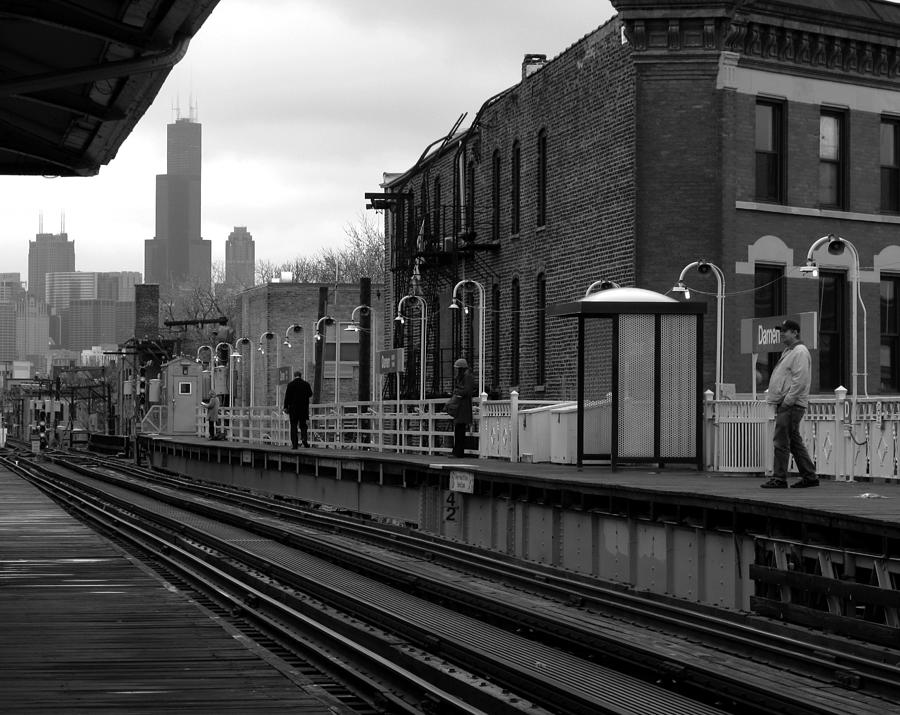
Graduation came later that summer. After the ceremony, the sergeant handed me rail and meal tickets for the entire class of 110 students. As Officer of Cadets, I was in charge of getting us from Kent State to the Aviation Cadet Center in San Antonio, Texas. We boarded three buses for Cleveland early the next morning, everyone in crisp tan uniforms, dark ties, and brown leather jackets. We caught the Nickel Plate train that ran from Cleveland to Chicago on the Kankakee line. We were to have lunch in Chicago and change trains to head South.

We pulled into Chicago a little late, but veteran services had our lunches ready on the platform; a row of picnic tables with bags of sandwiches, fried potatoes, soft drinks, and, of course, popcorn balls, all served by pretty girls and their mothers in bright print dresses. The popcorn balls had names and mailing addresses rolled up inside—in case a soldier wanted to write a girl back home. While the cadets ate, I looked for depot number three, where we were to catch the train to San Antonio.

The stationmaster checked our tickets and boarding time then scratched under the bill of his uniform cap. “Sir, these are for the CB&Q, the Burlington train leaving Union Station on Canal Street. This is Central Station, Michigan Avenue.”

chicago-train-station-frank-winters

“How do we get over there?” I asked, noting the boarding time.

“You could wait for a bus, but you can’t all get on one, and it’s not due for another twenty minutes. It’s not a long walk. A little over a mile and a half.” He pointed the way. “Cross Michigan Avenue Boulevard, take 12th Street West across the Chicago River, turn right on Canal Street North. Takes you right to the Canal Street station.”

I ran back down the platform to rouse the cadets from their lunches and conversations. “Gotta march, boys. Grab your bags. We’ll finish eating on the way.” I heard some grumbling, but no one lingered. We lined up smartly and headed out two-by-two. When we crossed Michigan Avenue, the walkway narrowed and our march slowed. A Chicago policeman rode up on a motorcycle.

“Officer,” I showed him the tickets, “we’re supposed to be on the Burlington train leaving the Canal Street station at 4:40.” He nodded, waved us from the walkway onto the road then led us up the street. At the next corner, he talked to two policemen directing traffic. They jumped in a patrol car and sped off, clearing our path to the Canal Street.

We lined up four-abreast and made good time marching in the center of the road. About a quarter mile out, one of the cadets took up singing and everyone joined in.

Over there, over there,

Send the word, send the word, over there

That the Yanks are coming, the Yanks are coming

The drums rum-tumming everywhere …

Other songs followed. It was a beautiful sunny day. People left the shops and sang with us; some marched with us, too. Musicians pulled up chairs along the sidewalk, played, smiled and waved. We turned north on Canal, and the crowd followed. Policemen stopped traffic and waved us along.

As soon as the station came in sight, we broke into a run. By the time we reached the platform on our tickets, our train was nearly out of sight. We’d missed it.

“Whatcha got,” the stationmaster asked, waving me over. He was a short, heavy-set man in a tight, dark uniform and a billed, conical cap. I showed him our tickets, and he checked them against the passenger train schedule.

“Next train out to St. Louie ’ll be here Thursday, three days.” My face dropped and my arms fell to my sides. The stationmaster added, “Course that won’t get you to San Antone. These tickets call for switchin’ trains in St. Louie, I—” He looked at the tickets again then at a pocket watch he pulled from his vest. “Hmmm. There’s a three-hour lay over.”

He walked into the station house, cranked up the wall phone, held the speaker to his ear, and leaned into the mouthpiece. “Helen, Charlie, be a doll and connect me to the president CB&Q. Got a problem at Union Station, Canal Street.”

I looked back at my 110 pilot cadets. One played “I’ve Been Working on the Railroad” on his harmonica. Most sat on their bags or leaned on platform posts, smoking or waiting silently.

The stationmaster hung up the phone then hurried to collar an engineer and conductor coming off shift. They had a quick exchange. Both men looked at me, nodded, and ran off across the yard. The stationmaster strolled back with a swagger in his step and a wide smile on his muffin face.

“Mister, we got you a train to St. Lou. A fast ‘n, too, so you should make your connection to San Antone.”

“How—?”

“Courtesy of my boss, the President of the Chicago, Burlington and Quincy Railroad.” His smile told me he held something back. “You said a hundred and ten cadets?” I nodded and he nodded back. “I told the engineer to hook up five Pullman sleepers and a diner car, so you’ll be ridin’ in style.” Hearing that, my cadets cheered, jumped up, and began talking loudly.
Slide1

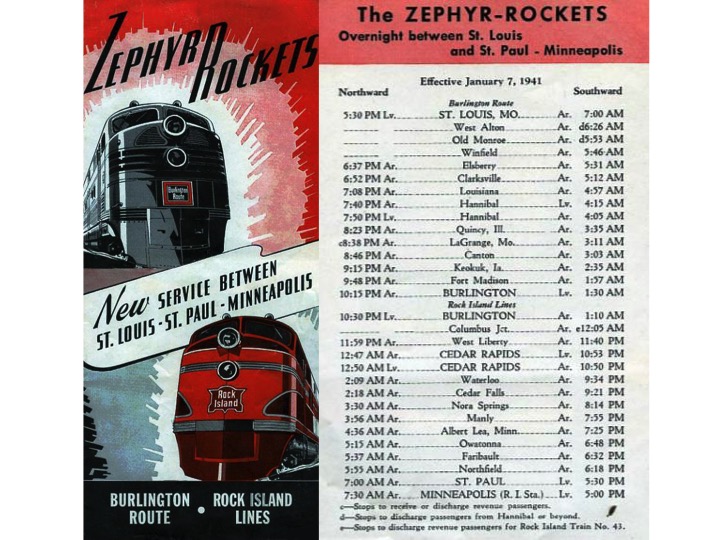
The locomotive was the Burlington Zephyr Rocket, top of the line, with seven cars attached. The conductor helped me get everyone settled in their bunks and cleared it with the diner to accept our meal tickets. We’d had a long day, so it wasn’t long before everyone turned in. I heard a long, sharp whistle, felt the train lurch, and saw the lights of the Canal Street station slip slowly past the windows.

I thanked the conductor, a tall, lean, black man who never lost his smile, then said, “Now I need to find some place to curl up.”

“No thanks necessary, sir. Come with me.” He led me to the back of the train to the last car, unlocked the door, and motioned inside. “The President of CB&Q Railroad said you was to have his personal coach.” He showed me around. It was a millionaire’s executive rail car, done up like a nineteenth-century luxury hotel room, polished brass, cut glass, imported furniture, and a full bath.

“You’ll want to say goodbye,” the conductor said, leading me outside onto the rear platform. I heard the wind rush by, the powerful chugging of the engine, and the clickety-clack of wheels running over the rails.

As the city lights receded in the distance, the conductor handed me a cold bottle of Old Milwaukee beer. “Sir,” he said, holding up one of his own.

We clicked bottles, and I offered a toast, “To your fine city, to Chicago, and to fine folks like yourself.” We drank down the beers and had a couple more.

As I looked out and listened to the clickety-clack, clickety-clack, I thought of Phyl taking another train to San Antonio. She followed me throughout my year of training, camp-to-camp, and took rooms off post.
Invaders from Space, Part 2

In last week’s blog post: At the clan council fire, bird-like warriors discussed how to deal with the invaders from space. Leal suggested that they might be trying to communicate.


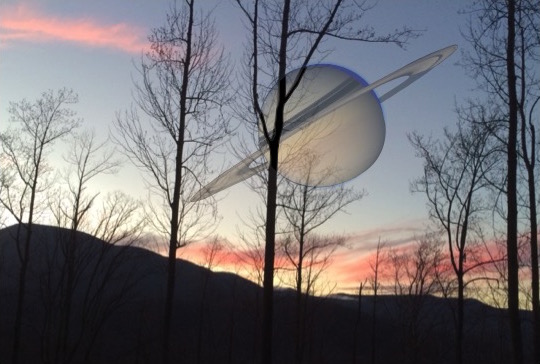
It had been five hundred years since Galactic Phoenix left Earth for a distant star system. Peter Odanoff hadn’t uploaded until just before the landing, but standing on the deck of the lander and viewing the deep orange sunrise made him nostalgic for home.

Wispy clouds on the western horizon indicated a summer storm building. The undulating string of winged creatures flying just ahead of the storm could have been a flock of migrating geese. He imagined his actual eyes squinting and the warmth of sunshine on his face. He swept an open-fingered hand over his head then jerked it back. He’d forgotten. No hair. Only contoured metal and the memory of hair.

After surveying the landing site, they’d spent the first day cutting and splitting cane stalks to build the deck. Its ramp was the only way to access the lander other than the telescoping ladder, which was difficult for Julia’s and Jeninne’s engineering chassis and for their dog Chloe.

Julia Rabkin the physical scientist had selected the landing site, a bare, level spot beside a gorge with access to potable water. The mountain-ridged horizon meant possible mineral resources. Jeninne Sobek the life scientist had started a research and vegetable garden. Our robot chassis required no organic food or medicine, but if things went well, soon there would be children, real children.

Peter was the pilot and chief technician. Though he missed Earth, he had no regrets. Interstellar travel had fascinated him from his youth. He knew his real self had lived a normal human life and been dead for centuries. How many children and grandchildren did he have now? Maybe they’d sent pictures along with software updates. He’d check when the day’s work was done.

The Russian engineers had done an amazing job, but Russians are known for their no-frills practicality. They put optical and aural sensors in his head, and thermal, tactile, and chemical sensors in his hands—so Peter’s hands could smell. He held one up to the morning light. To keep him sane, they’d reproduced his old physiognomy wherever possible. He flattered himself that he was strikingly handsome and was pleased the humanoid chassis reflected that image with a few cosmetic touchups.

Suddenly self-conscious, he pulled his hand down. The last thing he wanted to do was stir resentment. Until they manufactured other humanoid chassis, Julia and Jeninne were stuck with the engineering frames the Russians had given them—more practicality.

“Amazing sight.” Jeninne’s voice came from the agro-planter below the deck.

eclipsing-binaries-e1467453985567

“Yes,” Peter said and pointed. “If not for that second light, the illusion would be perfect.” Beside the sun was its yellow dwarf companion star.

Peter leaned over the rail as Jeninne’s gimbaled sensor whirled to look up. “Did Julia leave? I asked her to wait.”

“She took the geo-rover up the ridge.” Jeninne extended a pruning hook to the horizon. “She said that area tested radioactive. We don’t have feed materials, and the fabricator needs heavy metals.”

“I’d planned for us to scout that area together, but I know she’s been anxious. Any predators about?”

“There’s a man-sized moa-velociraptor-thing stalking the compound. I’ve only seen one, but there could be others. So far it’s kept to the forest. I’m more concerned about that pack of six-legged predators. Two dozen were sniffing the perimeter last night and pooping. They stayed out of the light. Each must weigh about fifty kilos. Julia calls them devil-dogs. They’ve got some vicious fangs and claws. If they go after her on the ridge, she has the laser stun gun, but it only gets three shots to a charge. Until we know what they’re after, I don’t want Chloe running loose.”

Hearing her name, Chloe barked. She was the only live member of the crew. The Yellow Labrador Retriever would soon be the mother of their first children. The nano-implants had already corrected Chloe’s cryo-damage and reset her gestation time.

Jeninne’s lenses swiveled back to Peter on the deck. “Need help with Chloe?”

“No, but would you unhook her tether?”

Peter called, “Chloe, come.” The big, yellow dog bounded up the ramp and, without slowing, made a hard left into the lander’s open bay.

“I don’t imagine Julia’s rover will attract any devil-dogs,” Peter said, “not for food anyway, but they might defend their territory.”

“I’ll try not to worry,” Jeninne said, rotating on her ball-base and rolling to the garden. “I’m testing the seeds we brought from Earth along with some local tubers and seed cases, also a few fern fruits and fungi for possible medicinal applications.”

The base station lab resembled a twenty-first-century, camper trailer kitchen. Peter lifted Chloe onto the white, MechMed counter. He stroked her ears, checked her pulse and breathing, then inserted the anesthesia needle.

He took a rack with four embryo tubes from the incubator, placed one tube in the MechMed, and hit scan. The timer bar glowed soft blue, ninety seconds, eighty-nine, eighty-eight.

Peter pressed the queuing button beside the comm switches above the examination counter. His preferences flashed by—Bach, Beethoven, Dvorak, Sibelius—as they had every morning for the past seven days. He liked starting the workday with the final movements of Beethoven’s Ninth Symphony, “The Choral” in D Minor, Op. 125.

A bell chimed once and the panel beside the timer bar flashed CLEAR in soft blue. Peter removed and examined the tube, restored it to the rack, and placed a second tube in the scanner. He hummed then whistled along with the music. This time, after ninety seconds, the bell chimed three times rapidly. The panel flashed ERROR 0.07% alternating with CORRECT? Peter touched the panel. A fraction of a second later a single bell chimed and CLEAR displayed. Quantum deterioration could be expected after so long a time, even near absolute zero. He removed the second tube, switched it, and placed a third into the MechMed.

When the “Ode to Joy” began, Peter sang along, Freude, schöner Götterfunken. He had sung in the chorus at Swarthmore and felt a familiar thrill rising. Suddenly, from the open hatchway behind him, he heard the sound of a melodious flute accompanying him.

“Wonderful, Jeninne, how are you doing that?” A bell chimed and CLEAR displayed. As he removed the third tube, Peter continued singing.

The flute accompanied the melody flawlessly.

“Magnificent,” Peter said, turning to the hatchway. “How do—”

A six-foot, bird-like creature blocked his exit. The creature rocked on its powerful haunches, its black tongue vibrating in its hooked beak like a silver flute. At the end of the musical phrase, the creature lowered and widened its horn-ridged, purple eyes, and centered its beak on Peter’s chest.

He stumbled back against the counter almost dropping the embryo tube. Without thinking, words tumbled from his mouth.

“That … that … that was pretty good … you just do the classics?”

The creature folded its scale-like feathers and opened its beak. “All I hear,” it said in a chime-like voice. “Come for know.”

Peter pulled erect. “You speak English?”

Leal dipped his beak. “Music better.”