Lisa Haselton Book Reviews & Interviews interviewed me for THE STARFLOWER. I always enjoy these and talking about SF&F and writing, as well as other creative endeavors. Please, if anyone has any questions send them along, I’ll be happy to respond.
I am often asked how a technical analyst (42 years in intelligence) came to write speculative fiction, and sci-fi in particular. I touch on this in the blog description: “More truth is said in fiction.” And watching a Jack Reacher movie a few months ago, I heard a similar comment from a defector: “Fiction has to make sense, intelligence does not.”
Many authors have chosen to couch serious societal comments in fantasy and fiction worlds. Mary Shelley’s Frankenstein expressed concern that scientists caught up in research would fail to consider its consequences. Kurt Vonnegut’s Cat’s Cradle expressed similar concern, and Player Piano projected an automated world that crowded out human labor. In Gulliver’s Travels, Jonathan Swift casts his societal satire in fantasy/SF worlds of miniature humans, giants, intelligent horses, and detached intellectuals floating about in a city in the sky. Consider Orwell’s Nineteen Eighty-Four and Animal Farm, both of which had trouble finding publishers because, as he was told, Joseph Stalin might be offended.
These and similar stories might be read for light escapism. The authors understood that in their time many were not ready to grasp their stories’ deeper implications. I suggest that their choice of fantasy and SF settings has much to do with these stories still being read today.
A Five Star Review of The Starflower, 13 September, 2024.
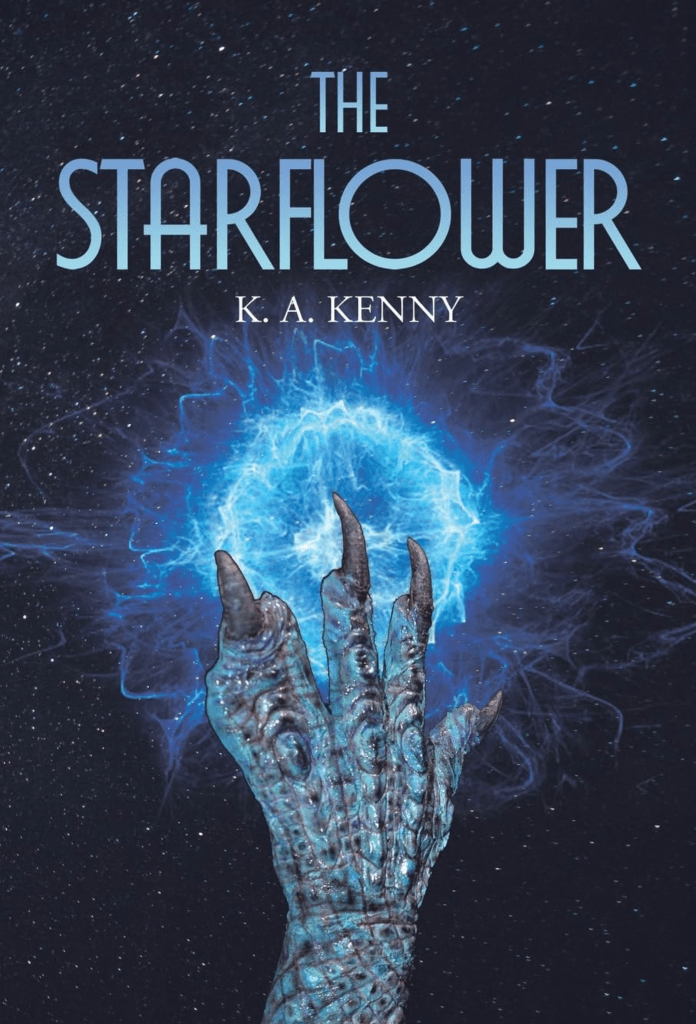
This was a vibrant story about the universe in the distant future…I believe a year that was mentioned was 3569 but that was at least a few years before this story takes place. A young military woman, The Starflower, became a hero to humans and many other alien species alike after numerous successful battles against the Aldrakin species that was waging war on many planets unable to fend for themselves. After a surprise attack that she strategically won subsequently ending the war, she is faced with jealousy from the Star Command back home. She may have ended the war, but the true enemy was still at large and had it’s targets set on her and her lover.
I was a little confused at the start of the book because it drops you straight into an immersive new world. I was able to easily find my way out of that confusion within the first few chapters and really got drawn into the story. The author was really able to make you imagine how these new worlds and alien species look and act. I found it absolutely fascinating. This is the best sci-fi book I’ve read in a while. Also as an editor I found very few errors so it was a nice clean read I could enjoy.
Not all the reviews have been five-star, which is understandable in an epic story that lays out an entirely new universe. And some readers prefer cozy, warm stories. Zim preferred that sort of life, too. She didn’t get it.
The overarching themes of this book are somewhat reminiscent of Gattaca (in its take on Eugenics and how it might affect human hierarchy) and also of Dune (in its prophetic ideas of a single person to unite and fight for the less fortunate). Nevertheless, this story takes a unique approach to both of these themes. The main character “Zim” (callsign “StarFlower”) is both endearing and realistic. She is thrust into a prophecy when she least expects it, and all that ensues is both exciting and terrifying. The characters are very enjoyable in their depth, and I enjoyed the vast universe that the author creates. I like the combination of good story telling with so much to unpack that it will surely be a great series!
My fourth short story for ’23 “Once People Danced” was published in ACROSS THE MARGIN on 27 July: “A work of science fiction wherein enlightened life forms from a civilized future consider the dark days of a twenty-first-century teeming with primitive humans…” This has been a great year. My SF novel THE STARFLOWER is set to publish on 18 Aug.

 Strange Things Done