Those We Left Behind

Readers don’t know what was cut, but writers know and may miss those they left on the cutting-room floor. And characters and scenes discarded to speed one story may have stories of their own to tell. These can return in sequels and side stories or spin off and fade like stories in our own lives. In my novel The Starflower some of my favorite untold stories are those of the alien warrior Tock.

Elder Hall – A Starflower Story

The flat, unadorned dome of Elder Hall was one of the few major structures on Tak-Yakon’s surface. 

Chirik, Ticket-Tockoket-Click. The lead elder ratcheted the traditional Chirik greeting and Tock’s full name, snapping the final click with its great claw. The other elders, one to each side of Ki-Ku-Li, tipped their triangular heads and waited as Tock centered its stick legs between the gaps of the clover-lobbed seat. These three led the Tak-Yaki military-caste. Tock was their field commander. 

The one-and-a-half-meter mantids each had two serrate-jawed clamp-claws, four stick-thin walking limbs, and dark-blue carapaces that softening to violet on their undersides. Garnet-faceted eyes topped the upper corners of their triangular heads with two alert antennae between them. The mandible-mouths in the low corner of their heads stirred with finger-like pedipalps.

Chirik, Elder Ki-Ku-Li, click-tirock.” Tock returned the greeting and tip-nodded its head to the other elders.

“Forgive our informality, Marshal Tock,” Ki-Ku-Li continued. “Before you left to assess our new Human allies, you mentioned their reputed ferocity possibly complementing our own.”

Antennae leaned forward as Tock began. “Due to their hostile natures, Humans barely survived long enough to master star travel and have made their world practically uninhabitable. After two mismanaged attempts, they successfully terraformed Corydon and relocated the Human population. Their two early attempts on Thrinlu and Scalaris continue to struggle and have progressed slowly.”

Seeing Ki-Ku-Li’s pedipalps fret, Tock jumped ahead. “To speed Human survival and recovery from war damage, the leaders of Corydon’s Star Council initiated a eugenics program, including selective breeding and genetic manipulation. Those selected they called Creatives. Those discarded, the Unders, they consigned to the less favored worlds Scalaris and Thrinlu.”

The antennae of the elder to Tock’s right pulled in. “Not unprecedented for a struggling species. I recall how our Tak-Yaki program reset our social order.”

“And it has with Humans, too.” Tock continued. “As a guide for genetic selection, Humans run annual competitions, combat trials they call the Corydon games or Corydonics, recalling games from ancient Human history. The first-place winner was to receive the Corydon Star and priority selection in the gene pool.

“Due to the combative nature of the Humans’ games I was keen to observe them, and the Star Council invited me to join them in their judging booth.”

Ki-Ku-Li stroked the underside of its mandible mouth with a massive claw. “Before going into detail, did you find any surprises?” 

“Although Humans are more elusive and contrived than we Tak-Yaki, aspects of their games reminded me of our Daka-Rye drills. That could play well in our alliance, but that was not my major surprise.”

Antennae angled forward and garnet eyes gleamed atop the three elders’ heads.

“Star Council’s plan was to populate Corydon with the improved Humans then expand to other terraformed worlds. None expected discarded Unders to challenge engineered Creatives, so Star Council extended invitations to all Humans, including those on Thrinlu and Scalaris.”

Tock extended a claw absently to stroke a bent antenna. “When two Unders accepted the invitation for Scalaris, they drew immediate attention. Expecting the upstarts to die or be eliminated in the first round, Star Council took no action. But the couple won not only the first round but the entire competition with Gayle Zimmon receiving the high individual score.

“As the Corydon Star was intended to recognize the top Creative, Star Council refused to award it to an Under. Instead, they gave her a one-time medal styled on a weed native to Scalaris, a Starflower. They intended the medal as an insult, but Zimmon accepted her award gracefully.”

Ki-Ku-Li rolled its wide, flat claws out. “This Human shows character, but why have you brought her story to Elder Hall?”

“The Aldrakin War broke out shortly after the games, and we and the Humans became allies. As winner of that year’s combat games, Gayle Zimmon was called up and entered basic as a top officer candidate. Other top candidates included many she had just defeated in the Corydonics. It didn’t go well. When they attacked her, she put one in the infirmary. As a visiting ally, I witnessed the assault. Zimmon showed controlled restraint and could have killed her attacker. But that wasn’t how the military commander saw it. At the reception that evening, Zimmon’s training squadron assigned her the call sign Starflower, continuing their insult.”

“And you brought this to Elder Hall, why?” Ki-Ku-Li asked again.

“When Star Council’s Chief Military Officer Abramyan was uncertain how to proceed, I recommended that our alliance would benefit from a liaison officer, someone to learn Tak-Yaki war methods and orchestrate blended actions. If details could be worked out, Gayle Zimmon might complete her basic training with us on Tak-Yakon. Abramyan leaped at the opportunity to clear his claws of his troublemaker. Human media has been obsessed with ‘the Starflower’ ever since the combat games, and he wants to rid himself of the distraction.”

The elders’ heads rocked up as Tock concluded. “I’m impressed with this Human and see great possibilities in this exchange. However, we have never included an alien species in our military training. I need your go-ahead to proceed.”

Xanadu Books Interview

I enjoy interviews (hint to any readers in that business) and had fun working with Xanadu Book Awards & Press. Their approach concentrates on a writer’s motivation and personal resources. To my experience, writers can be very different. Especially creative writers who think outside the formula.

More Truth Said in Fiction

I am often asked how a technical analyst (42 years in intelligence) came to write speculative fiction, and sci-fi in particular. I touch on this in the blog description: “More truth is said in fiction.” And watching a Jack Reacher movie a few months ago, I heard a similar comment from a defector: “Fiction has to make sense, intelligence does not.”

Many authors have chosen to couch serious societal comments in fantasy and fiction worlds. Mary Shelley’s Frankenstein expressed concern that scientists caught up in research would fail to consider its consequences. Kurt Vonnegut’s Cat’s Cradle expressed similar concern, and Player Piano projected an automated world that crowded out human labor. In Gulliver’s Travels, Jonathan Swift casts his societal satire in fantasy/SF worlds of miniature humans, giants, intelligent horses, and detached intellectuals floating about in a city in the sky. Consider Orwell’s Nineteen Eighty-Four and Animal Farm, both of which had trouble finding publishers because, as he was told, Joseph Stalin might be offended.

These and similar stories might be read for light escapism. The authors understood that in their time many were not ready to grasp their stories’ deeper implications. I suggest that their choice of fantasy and SF settings has much to do with these stories still being read today.   

A Five Star Review of The Starflower, 13 September, 2024.

This was a vibrant story about the universe in the distant future…I believe a year that was mentioned was 3569 but that was at least a few years before this story takes place. A young military woman, The Starflower, became a hero to humans and many other alien species alike after numerous successful battles against the Aldrakin species that was waging war on many planets unable to fend for themselves. After a surprise attack that she strategically won subsequently ending the war, she is faced with jealousy from the Star Command back home. She may have ended the war, but the true enemy was still at large and had it’s targets set on her and her lover. 

I was a little confused at the start of the book because it drops you straight into an immersive new world. I was able to easily find my way out of that confusion within the first few chapters and really got drawn into the story. The author was really able to make you imagine how these new worlds and alien species look and act. I found it absolutely fascinating. This is the best sci-fi book I’ve read in a while. Also as an editor I found very few errors so it was a nice clean read I could enjoy.

The Starflower

This has been a great year for “Strange Things Done”.

Several of my short stories have been published, four this year, my best year. And Austin Macauley Publishers informs me that advanced copies of my SF novel THE STARFLOWER are available in soft back now on their site: https://www.austinmacauley.com/us/book/starflower

The official publishing date is 18 August 2023. The Epub and audio should be available at other sites shortly.

The Starflower

“Once People Danced”

My fourth short story for ’23 “Once People Danced” was published in ACROSS THE MARGIN on 27 July: “A work of science fiction wherein enlightened life forms from a civilized future consider the dark days of a twenty-first-century teeming with primitive humans…” This has been a great year. My SF novel THE STARFLOWER is set to publish on 18 Aug.

“What I Played for Love”

Another of my short stories was published at the end of June. That makes three this year—a personal record. In “What I Played for Love” an older man smitten by a younger woman fails to read his contract and gets taken. Dark Horses: the Magazine of Weird Fiction No. 18 is only in hard copy and is available on Amazon:

Amazon.com: Dark Horses: The Magazine of Weird Fiction No. 18: July 2023 (Dark Horses Magazine) eBook : Spitzer, Wayne Kyle, Watson, Stuart , Lang, Noah , Bondies, Michael , McGlyn, Jessica , Franks, Lillie E. , Sumner, Tiffany, Gielo, Bob , Harper, James , Kenny, K.A. : Kindle Store

Ever-Endeavor

In the spirit of keeping one’s mind active, I have taken to writing down my ideas and aberrant thoughts. Some of these become stories and some are picked up for publication. My flash fiction piece “Ever-Endeavor”, a look back at life from the beyond, was published yesterday in the online magazine ALTERED REALITY for their Spring edition: https://www.alteredrealitymag.com/ever-endeavor/

Second Chance – A Bewildering Story

Bewildering Stories welcomed me as one of their authors and gave me my first publication for 2023. “Second Chance” began as a character study with no redeeming characters. Kip told me what happened in an interview.

Kip a criminal serving time collecting trash in space is given an opportunity to mend his ways…or not. See the story by K.A. Kenny.
http://www.bewilderingstories.com/issue987/

Pity Not the Fool

The story begins twelve hundred years earlier with Vikings concealing a mystical trunk to keep it out of the hands of Frankish heretics. (See “Fool’s Cap”)

By the time Ernest Woerth reached the lab, the trunk had arrived, and Lisa Svanetti was signing the paperwork. She was a graduate student in medieval history and an expert in Nordic runes. She had read his paper on the Jestercians and come to Nimueh College to work with him.

“Excellent,” Ernest said, checking the trunk’s seal and general condition. The oak trunk was twenty inches long by twelve high and wide, and bound with brass hinges and fittings. The boards were caulked and seams sealed with pitch and pine tar, like ship hulls in the ninth century.

“Is this the Dorestad cache?” Lisa asked, pointing to the tar-stained seal. When Ernest nodded, she squealed and danced around in a circle.

“They should make for an excellent thesis,” Ernest said. “I want you to take the lead.” She jumped to embrace him. “But before we celebrate, let’s make sure there is something inside.” He went to the tool cabinet for a chisel.

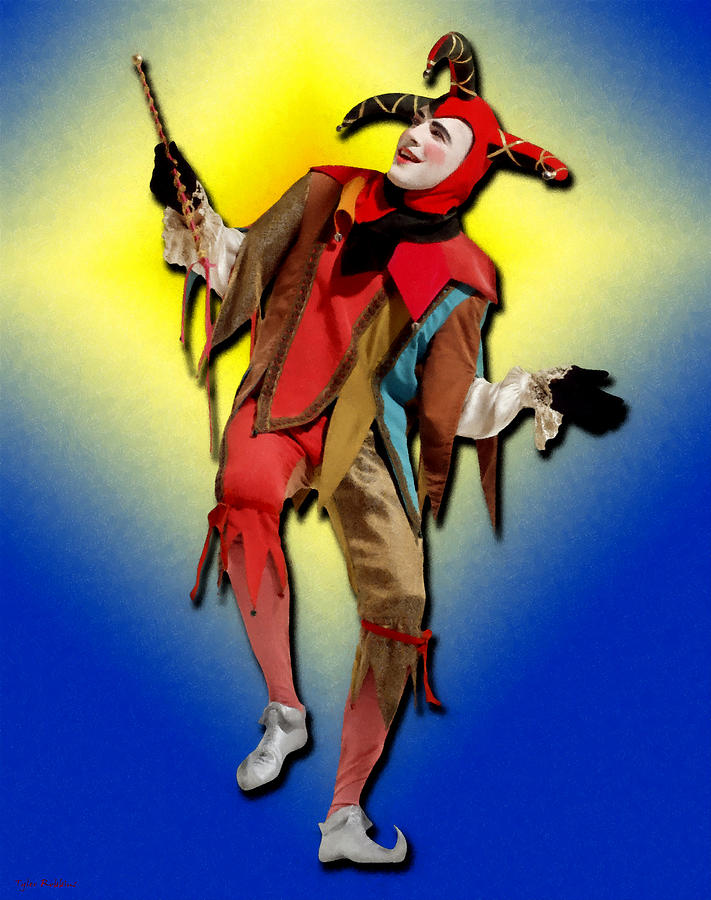
the-court-jester-tyler-robbins

While they talked, a young man came in, plopped himself in a side chair, and swung his legs over the arm. “Hi, Ernie. I see my project arrived. Uncle Scott said you needed some help.”

“Indeed, I do, Bryton,” Ernest said, drawing a thin smile and regretting his promise to Dean Gilders to keep his nephew Bryton busy.

Bryton scratched his patchy beard then pulled the smiley-face emblem on his tee shirt to free it from sticking to his body. The smell of fried potatoes and stale sweat wafted into the room. Ernest glanced at the unopened trunk then at Lisa, who covered her mouth with her hand.

“Hi, Bryton.” Lisa nodded in the young man’s direction. I’m Lisa Svanetti, Dr. Woerth’s graduate intern.”

“Nice to meet you, Liz,” he raised his hand as if to wave then ran fingers through his matted hair. “Yer kinda like the formal type, huh? And real booky.”

“Yup. And you’re a quick one.”

“My mother always told me that.”

“Enough chat,” Ernest said. “Time to get to work.”

“Sure ‘nuff, Ernie.” Bryton slid one leg off the chair arm and shifted his body to watch. While Lisa softened the pine tar with linseed oil, Ernest worked the seals. The last one parted a half-hour later.

“You superstitious?” Ernest asked Lisa.

“About the curse? I’ll risk it to be the first to lift the trunk lid,” she said, and Ernest nodded for her to go ahead.

The stale odor of desiccation overwhelmed the smell of French fries coming off Bryton. Lisa inhaled deeply, and Ernest motioned her to continue. Inside she found six scrolls, each individually bound with a leather strap and sequestered in its own pigeonhole.

“Those the doorstops?” Bryton asked, leaning forward without shifting a leg. “They look like rolls of old newspaper.”

“The Dorestad Scrolls,” Ernest corrected, turning one in his hand. “Sheepskin vellum, ninth century. Paper didn’t reach northern Europe until the 13th century. The Franks never found them when they overran Dorestad—probably the last Viking stronghold in Germany.”

Lisa transferred the scrolls to plastic sleeves then prepared the lab table to re-hydrate, unroll, flatten, and repair them: spatulas, surgical knives, magnifiers, ink, brushes, fountain pens, oil, leather preservative, sprayer, steamer, document spreader, all tucked in bins along the lab table.

Bryton stretched his body across the arms of the chair and yawned. “You know, dudes, I’m not big into crafts. Think I’ll get a bite in the cafeteria. No rules against lunch, right?”

“None at all, Bryton,” Ernest said without looking up. “Go ahead. We’ll be along.”

Lisa lifted the rough-hewn trunk to clear space then set it back to complete her examination. “They wanted this watertight. It’s makeshift but solid. Look at the hinges.” She lifted the lid wide, and Ernest brought headlamp magnifiers for the two of them. Feeling inside, Lisa detected another seal and tapped the lid. Hollow.

Ernest reached for the chisel. “Looks like there’s something the Jester didn’t want found—a treasure perhaps,” he said. Lisa’s eyebrows arched. The panel came free in one minute, and with it, a stack of wedges, alternating red and green and sown along the edges.

“Leather?” Lisa wondered aloud as she turned the stack under the light. “

“Give it a little Neatsfoot oil and let it soak.” Ernest checked his watch. “We missed the cafeteria.”

“I’m too excited to eat. All I can think about is reading the scrolls.”

“Very well,” Ernest said. “I’ll help you unroll them. Tomorrow we can work on the leather stack.”

“What do you think it is?”

“What I hope it is.” His eyes shifted wistfully upward. “According to legend, the Jester gave her apprentice mage a device to help him master the scrolls, a fool’s cap. It designated his training status and bestowed immunity from punishment should he screw something up in his training.”

“Like Mickey Mouse’s cap in ‘The Sorcerer’s Apprentice’ in Fantasia?” Ernest nodded.

Lisa cocked her head and asked, “So why do we only think of fool’s caps being worn by court comedians?”

“When the Franks and later medieval kingdoms couldn’t get any of the Jestercian incantations to work, they made fun of them. The fool’s cap became a sign of derision, the same as the Jester. They wore replicas to mock Vikings and Druids. We might have found the original fool’s cap or one of the replicas—or it might just be a leather purse.”

Will the Fool’s Cap be a blessing or a curse? Next week’s blog post.

Invaders from Space, Part 2

In last week’s blog post: At the clan council fire, bird-like warriors discussed how to deal with the invaders from space. Leal suggested that they might be trying to communicate.


It had been five hundred years since Galactic Phoenix left Earth for a distant star system. Peter Odanoff hadn’t uploaded until just before the landing, but standing on the deck of the lander and viewing the deep orange sunrise made him nostalgic for home.

Wispy clouds on the western horizon indicated a summer storm building. The undulating string of winged creatures flying just ahead of the storm could have been a flock of migrating geese. He imagined his actual eyes squinting and the warmth of sunshine on his face. He swept an open-fingered hand over his head then jerked it back. He’d forgotten. No hair. Only contoured metal and the memory of hair.

After surveying the landing site, they’d spent the first day cutting and splitting cane stalks to build the deck. Its ramp was the only way to access the lander other than the telescoping ladder, which was difficult for Julia’s and Jeninne’s engineering chassis and for their dog Chloe.

Julia Rabkin the physical scientist had selected the landing site, a bare, level spot beside a gorge with access to potable water. The mountain-ridged horizon meant possible mineral resources. Jeninne Sobek the life scientist had started a research and vegetable garden. Our robot chassis required no organic food or medicine, but if things went well, soon there would be children, real children.

Peter was the pilot and chief technician. Though he missed Earth, he had no regrets. Interstellar travel had fascinated him from his youth. He knew his real self had lived a normal human life and been dead for centuries. How many children and grandchildren did he have now? Maybe they’d sent pictures along with software updates. He’d check when the day’s work was done.

The Russian engineers had done an amazing job, but Russians are known for their no-frills practicality. They put optical and aural sensors in his head, and thermal, tactile, and chemical sensors in his hands—so Peter’s hands could smell. He held one up to the morning light. To keep him sane, they’d reproduced his old physiognomy wherever possible. He flattered himself that he was strikingly handsome and was pleased the humanoid chassis reflected that image with a few cosmetic touchups.

Suddenly self-conscious, he pulled his hand down. The last thing he wanted to do was stir resentment. Until they manufactured other humanoid chassis, Julia and Jeninne were stuck with the engineering frames the Russians had given them—more practicality.

“Amazing sight.” Jeninne’s voice came from the agro-planter below the deck.

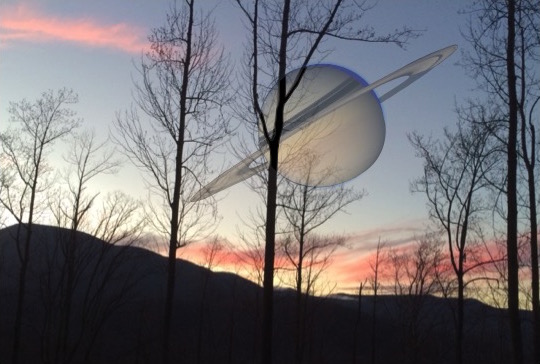
eclipsing-binaries-e1467453985567

“Yes,” Peter said and pointed. “If not for that second light, the illusion would be perfect.” Beside the sun was its yellow dwarf companion star.

Peter leaned over the rail as Jeninne’s gimbaled sensor whirled to look up. “Did Julia leave? I asked her to wait.”

“She took the geo-rover up the ridge.” Jeninne extended a pruning hook to the horizon. “She said that area tested radioactive. We don’t have feed materials, and the fabricator needs heavy metals.”

“I’d planned for us to scout that area together, but I know she’s been anxious. Any predators about?”

“There’s a man-sized moa-velociraptor-thing stalking the compound. I’ve only seen one, but there could be others. So far it’s kept to the forest. I’m more concerned about that pack of six-legged predators. Two dozen were sniffing the perimeter last night and pooping. They stayed out of the light. Each must weigh about fifty kilos. Julia calls them devil-dogs. They’ve got some vicious fangs and claws. If they go after her on the ridge, she has the laser stun gun, but it only gets three shots to a charge. Until we know what they’re after, I don’t want Chloe running loose.”

Hearing her name, Chloe barked. She was the only live member of the crew. The Yellow Labrador Retriever would soon be the mother of their first children. The nano-implants had already corrected Chloe’s cryo-damage and reset her gestation time.

Jeninne’s lenses swiveled back to Peter on the deck. “Need help with Chloe?”

“No, but would you unhook her tether?”

Peter called, “Chloe, come.” The big, yellow dog bounded up the ramp and, without slowing, made a hard left into the lander’s open bay.

“I don’t imagine Julia’s rover will attract any devil-dogs,” Peter said, “not for food anyway, but they might defend their territory.”

“I’ll try not to worry,” Jeninne said, rotating on her ball-base and rolling to the garden. “I’m testing the seeds we brought from Earth along with some local tubers and seed cases, also a few fern fruits and fungi for possible medicinal applications.”

The base station lab resembled a twenty-first-century, camper trailer kitchen. Peter lifted Chloe onto the white, MechMed counter. He stroked her ears, checked her pulse and breathing, then inserted the anesthesia needle.

He took a rack with four embryo tubes from the incubator, placed one tube in the MechMed, and hit scan. The timer bar glowed soft blue, ninety seconds, eighty-nine, eighty-eight.

Peter pressed the queuing button beside the comm switches above the examination counter. His preferences flashed by—Bach, Beethoven, Dvorak, Sibelius—as they had every morning for the past seven days. He liked starting the workday with the final movements of Beethoven’s Ninth Symphony, “The Choral” in D Minor, Op. 125.

A bell chimed once and the panel beside the timer bar flashed CLEAR in soft blue. Peter removed and examined the tube, restored it to the rack, and placed a second tube in the scanner. He hummed then whistled along with the music. This time, after ninety seconds, the bell chimed three times rapidly. The panel flashed ERROR 0.07% alternating with CORRECT? Peter touched the panel. A fraction of a second later a single bell chimed and CLEAR displayed. Quantum deterioration could be expected after so long a time, even near absolute zero. He removed the second tube, switched it, and placed a third into the MechMed.

When the “Ode to Joy” began, Peter sang along, Freude, schöner Götterfunken. He had sung in the chorus at Swarthmore and felt a familiar thrill rising. Suddenly, from the open hatchway behind him, he heard the sound of a melodious flute accompanying him.

“Wonderful, Jeninne, how are you doing that?” A bell chimed and CLEAR displayed. As he removed the third tube, Peter continued singing.

The flute accompanied the melody flawlessly.

“Magnificent,” Peter said, turning to the hatchway. “How do—”

A six-foot, bird-like creature blocked his exit. The creature rocked on its powerful haunches, its black tongue vibrating in its hooked beak like a silver flute. At the end of the musical phrase, the creature lowered and widened its horn-ridged, purple eyes, and centered its beak on Peter’s chest.

He stumbled back against the counter almost dropping the embryo tube. Without thinking, words tumbled from his mouth.

“That … that … that was pretty good … you just do the classics?”

The creature folded its scale-like feathers and opened its beak. “All I hear,” it said in a chime-like voice. “Come for know.”

Peter pulled erect. “You speak English?”

Leal dipped his beak. “Music better.”