Fill in the Blank

“The time has come, the walrus said, to talk of many things …”  – Through the Looking-Glass


Booths on one bare wall of the windowless waiting room were flanked by glass cases on two walls and opposite a single metal door centered on the far wall.

A new human strode boldly from one of the booths toward the exit. It wore red tights and a canary-yellow, breast-peaked T-shirt, and had spiky blue hair, pouty lips, and impossibly blue, saucer eyes. A second human wearing a white dress shirt, dark tie, and beige canvas trousers, walked out more slowly, her face buried in a schematic design for a fusion rocket motor.

“Next, L-F-O-O-Z, you’re next,” a handsome young walrus called from one of the assignment booths. A doughy blob in one of the glass cases looked around. None of the other blobs moved. It looked down at the label on its case. “Yes, you, Lfooz. Please come along. Don’t worry. Your name will change when you get assigned.”

The blob slid over the case wall onto the vinyl tile floor then oozed toward the assignment booth. The walrus official walk-paddled to the other side of a low counter and motioned for Lfooz to slide up. The nested stack of trays on the counter looked like one used to display jeweled earrings for purchase or to distribute communion cups.

“You understand why you’re here? Why this is important?” the walrus official asked, wiggling his close-cropped whiskers. Lfooz wrung itself like a wet towel. “Okay, let’s start with the basics. Do you know what you want to be in life?” Lfooz gave a slow twist.

“These,” the walrus said, setting a display tray in front of Lfooz, “are life choices.” The tray held capsules of all colors. “The one you pick determines your attributes: interests, character, intelligence, sense of humor, skills, and your setting—race, sex, nationality, family background. Some like to call it ‘the hand you’re dealt.’ Once you make your decision, you’ll proceed to birthing, forget your experience here, and live out your life. At life’s end, you’ll transfer to Ever-Endeavor (see explication in “Time Cube”) to harvest the fruits or wretchedness you’ve sown. Shall I show you some of your choices?” The walrus waved a flat flipper over the display trays.

Lfooz pointed a pseudopod. “What me? A walrus? Yah, some choices you only get once in life. I was being cocky—thought if I did something stupid they’d give me a do over.” Lfooz motioned to the door on the bare wall where the women had exited a moment before.

“Those two?” Lfooz’s dough body rose and fell. “You get to drive your life choice out of the showroom, but they’ll still have to go through birth, childhood, and adolescence. Sorry, that’s life.”

He pointed to a red capsule. “This one’s very athletic and doesn’t think too much. It comes in male and female versions, or a mix of both. Fans cheer and mates throw themselves at you. You make a lot of money, cover yourself with tattoos, abuse yourself with drugs and alcohol then die young in a bar fight. Comes with a full guarantee.” When he got no reaction, the walrus pointed to the blue capsule.

“This little baby is brilliant and also comes in male and female makes. It’s an inventor, a creator, makes a boatload of money designing stuff, but doesn’t have much time to spend it or to find mates. It lives a long quiet life with cars and cats for companions. Also guaranteed.” Lfooz rolled two doughy arms together, and the walrus moved on.

“The green capsule provides everything you need: food, housing, medical care, clothes, and you don’t have to lift a finger. You spend your days outside, looking at flowers and pigeons, and collecting money from passersby. It’s nondescript, most people won’t care what your sex is and neither will you. Guaranteed.”

The walrus went through the entire stack of trays and choices, and got no reaction. Then he asked, “See anything that interests you?”

Lfooz’s boneless mass rose and fell twice. It extended a dough finger to specific attributes for several capsules: the first, second, fifth, eighteenth, thirty-seventh.

“I see,” said the walrus, “you want a balance, to be a stable, healthy, wise, hard-working, dependable, and friendly person who divides time for family, profession, and other interests.” Lfooz rose and fell slowly.
catphoto

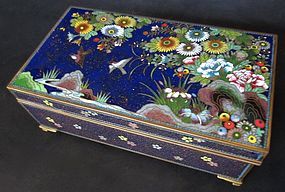
“Of course.” The walrus pulled a small cloisonné box from a rear shelf. Within its gold interior was a single white capsule. “This one can provide everything you hope for.”

Lfooz scanned the attributes list, each line followed with a single word “optional,” and pointed to the blank on the last line.

“No, it carries no guarantees.” When Lfooz looked puzzled, the walrus explained. “My mistake, it does have one guarantee. However you arrive in life, whatever your situation, your fate will be determined by decisions you make and the courage you have to see them through. This life starts where it starts and has neither ceiling nor floor.”

Lfooz took the white capsule and walked upright from the booth, determined to take the best of whatever life offered. No guarantees.


Looalee

The Looalee cleaned out the deer’s body then the hunter’s. It swept up the spinal cord and into the brain, collecting phosphorus, potassium, salts, and other nutrients in the rich fatty tissue.

It had learned from previous encounters that human brains also contained information that might be useful. The hunter knew the way to the other ocean, the one the Looalee had never visited, at least not since the great continent split. But first it wanted to visit the ocean called Lake Michigan, which the hunter knew contained fresh water. How could that be?

It left the hunter and poured back into the stream, flowing with the current into a larger stream then a river. In two days, it came to a canal and a lock. When the lock opened, the Looalee followed a ship through.

The full moon and lights along the sides of the lock reflected the silver blue sheen the Looalee imparted to the water’s surface. Workman pointed and ran along the walls, shouting to the ship’s crew, mistaking the Looalee for an oil leak. Diving beneath the ship’s hull, it kept low until the final lock was cleared then flowed into the wide lake.

The fresh water had pulled precious salts from its liquid body. It needed to feed sooner than it had planned.

MoonoverWater

Bright lights and manicured trees lined a walkway along the shore. The moon was still high and sunrise a couple hours away. A car swept along the parkway, headlights ablaze. The Looalee could catch one but knew that would bring humans with flashing lights. So it combed the edge of the lake searching for someone alone. Another car’s headlights illuminated a park bench and a very small, dark woman slumped forward clutching the top of a large cloth handbag in her lap.

It rose up from the lake, flowed across the concrete walkway, and slid through the dewy grass. The woman didn’t move, but the Looalee sensed she was watching it.

It flowed onto her scuffed, torn shoes, and in through the open toes. Callouses on the old woman’s feet collapsed and blocked her pores, so the Looalee moved up her leg to enter her body. The salts in her thin decomposed spine had broken down and dissolved slowly.

“My name it Ruby,” the woman said in a frail cracking voice. “It took you a long time to get here. I’ve been waiting.”

“You know who I am?” the Looalee asked Ruby’s brain.

“Certainly. I’m not dead yet. That’s why you’re here, isn’t it? You’re Death.”

“Yes, that’s why I’m here.”

“Well, since you waited so long, you might wait one day longer.”

“Why would one day matter?”

“Today is my birthday. I’m ninety years old. My granddaughter’s coming over with her little boy. He’s two months old—my first great grandchild. I’m a great grandmother. Who would have thought it?” When no response came, Ruby asked, “Perhaps Death might visit me tomorrow?”

The Looalee knew, whatever it did, Ruby would not live long enough to leave the park, probably not this bench. Her neurons were shutting down, her blood slowing, and her heart was beating away its last few moments.

It pushed potassium and phosphorus back into Ruby’s system, widened the capillaries to her heart and brain, and restored failed synapses. It felt her heart’s rhythm steady under the reduced strain.

“Where will I find you tomorrow?” the Looalee asked Ruby’s brain.

“Oh, I’ll be right here. I always greet the morning by feeding the birds. They expect me. I couldn’t disappoint them.”

“Very well, I’ll see you tomorrow.”

“Thank you, Death. You are very kind.”

The Looalee knew Ruby would be there as she promised. She had that kind of character. But by morning, it would be far away heading to the Pacific.

First it had to feed—and fast. It flowed back down into the lake then out toward the bridge where a small boat was moored. Inside the boat, two young people were busily misbehaving, too busy to notice.


This is the fifth of my Looalee stories and the first I’ve posted. It comes in the middle of the series. The others are set on both coasts. I hadn’t planned to write a transition story then changed my mind. It is a primordial being tossed up by a seismic episode. It came ashore at the Looalee marina in South Carolina. First labeled a deranged serial killer then a monster, it was given the name The Looalee for the headline.

The Navigator’s Dream

“What does the fish think when he is jerked up … through the silver limits of existence and into a new universe …?”   – Stephen King, The Dark Tower

Panic rose in my throat. It was my first trip to the Bayabi Hall of Justice. I felt an urge to flee but knew that would condemn me to a life of solitude, to dream alone until my final day of bursting.

The great domed hall smelled of the sea, salty, moist, and warm. Its animated wall and ceiling décor depicted the Bayabi concept of the universe: a vast sea filled with strings of bubbles, snaking upward to touch and burst on the molten silver sky. I imagined I was one of those bubbles pressing onto the surface.

6796552-gorgeous-bubbles-wallpaper-2

Everyone wore simple, knee-length, white gowns. The Judge behind the high altar looked down, paying me no notice.

“Righteous Judge,” announced the clerk, “may your bubble rise, and in the fullness of time, burst in glory on the surface of heaven.” The Judge nodded the clerk to proceed. “First on the docket, the inquest into the bursting of the Navigator, Gorlet. Arthefal is here as witness.”

The judge narrowed her gaze on me. “You are Arthefal? You understand your summons?”

“I am. I do. I am to give account of my relationship with Gorlet.”

The Judge corrected, “This is an inquiry into the nature and the departure of Gorlet, generally known as the Navigator. Thus we shall refer to him in these proceedings. You knew him well?”

“The Navigator initiated my first dream with—”

“Briefly, recount the highlights of your relationship.” The Judge sounded impatient.

“For the brevity you request, my I dream my experience?”

The Judge nodded, and I drew her into my dream. We stood in darkness … a shaft of light cut through … gray bands appeared in the haze, thinning and darkening, becoming the wizened image of Gorlet the Navigator. “Come, my little one,” he said. “Come and dream.” I blinked, panicking at the unfamiliar light and reaching about in the open space. “Dreams have no walls,” Gorlet explained calmly. “Have no fear. Your bubble has not burst. The surface of the eternal sea remains far away.”

I dream-guided the Judge through my early experiences, making sense of colors, chords, and colognes, waves of impressions crashing, slowly gathering form and meaning.

Gorlet said, “Many beings cannot dream, and we must dream for them.” He demonstrated by turning a formless spark into a swirl of blue petals atop lacy, green leaves.

The Judge flew with me and the Navigator, through dreams of rivers and mountains, over reedy ponds, into caverns and canyons. We talked with dream citizens: village venders, dancers, and street philosophers. At long last, we took sail with the Navigator on a small craft, outbound on the dream sea to the end of all dreams, where waking and bursting become one, where only Navigators dare.

The Judge pulled suddenly back, her hands and head shaking as if from intense cold. “I respect your skills and the skills of the Navigator,” she said, “but to go so near death, so near the bursting … it frightens me.”

The Judge’s words recalled to me Gorlet’s warning. They respect our skill and courage, but also fear us for our insights. I looked at the Judge. “The Navigator was an artist. He taught me the art of dreams, that they are limited only by our fear and imagination.”

“Very good,” said the Judge still shaking. Her hands clutched the folds in her white gown. “The Navigator gave you a fine education, but did he ever teach you any … proscribed practices?”

“No.” I effected a confused expression. The Navigator had warned me not to betray knowledge that might condemn me.

“So you haven’t heard of the Harvesters?” The Judge got to the point.

I chose my words carefully. “I know they are a heretical cult that despises our dream culture, but I have no knowledge of their specific practices. Harvesters worship demons. They believe demons exist outside our dreams and beyond the great sea. They wait to pluck us up from the sea when we burst—harvesting us when we are ripe. Harvesters conspire with these demons to gain favor. Their hope is to dream forever and never burst.”

“Have you had liaisons with the Harvesters?” The Judge pressed.

“Not to my knowledge. They keep their membership secret.” I decided I needed to clarify. “Navigators are not Harvesters. Navigators seek to understand dreams. We see them as evolving truth. Harvesters seek out demons to gain power over our dreams.”

The Judge nodded. “Arthefal, your answers are satisfactory. I assume with your training complete, you now inherit the mantle of the Navigator, and will begin training others?”

“That was my promise to Gorlet.”

“Go in peace then, Arthefal. May your bubble rise, and in the fullness of time, burst in glory on the surface of heaven.”

I was relieved the Judge had withdrawn from the last dream and not pursued its meaning. The abbreviated version I shared with her had left out the morning discussion.


“This is my last dream,” Gorlet had said. “My bursting dream, where all mystery ends.”

I protested: he was too young and my training was incomplete.

“My bubble has risen a thousand dreams,” he said gently. “If you believe you are unprepared, you may refrain from the final lesson.”

That wasn’t an option and I told him so. Without further discussion, he swept me onto that small craft and the journey the Judge had fled. We were well out to sea, headed where sea and dreams meet the molten silver sky.

A tempestuous wind rose quickly. Mountainous waves crashed over the deck and sent our craft plunging. I hung on.

“It’s the bursting storm,” Gorlet shouted against the howling wind. The dream sky flickered, went black, then flashed and brightened again.

“When the doorway cracks open—” he started to say, but before he could finish, we were bathed in an impossible blazing light. The current carried us forward. I leaned behind Gorlet’s shadow to shade my eyes. The sea before us was draining through a glowing gateway.

“Depart now,” Gorlet yelled and pushed me into the sea. “Find safety in your own dream or you’ll burst in mine.” He paddled toward the light.

Suddenly in my own formless dream, I reached out to Gorlet’s churning sea. He saw me return and waved me back just before vanishing through the glaring gateway. I splashed, tasted salt, and struggled to stay in the Navigator’s dream, now a half dream as he began to wake.

The scene changed. A narrow crack blinked at balls of light hovering overhead. The sea was gone. Gorlet’s bubble was gone. Undecipherable, soft sounds filled my new ears, pungent odors stung my nose, and I felt myself lifted by large warm hands.

“They welcome me,” Gorlet said, sharing his fading dream. “I don’t understand … but I feel I’m part of them.” The edges of the hovering lights softened and melted. I found myself alone in my own dream.


Dear students, I preserved this dream to share it with you now. The walls of my bubble grow thin, and soon you may witness my own bursting. Our predecessors speculated that there was life after bursting. Embracing that concept compels us to reconsider the purpose of our dreams.

May your bubble rise, and in the fullness of time, burst in glory on the surface of heaven.

Golden Mind

The white-robed priest kept her hands folded as they walked the wide hallway. Pearly-white marble pillars and bas-relief floral designs gilt with lustrous gold lined their path. “I don’t have the Golden Mind’s omniscience,” the priest said, “but if you have any preliminary questions, about the Auric Sisterhood or about our sacraments, I’m sure I can answer them.”

“Our readers are interested in the Auric order and in your rituals,” Truly said, “particularly the mystery of how great questions are brought to the Golden Mind.”

“The Aurics are an ascetic cult,” the priest said. “We reject all forms of selfishness: physical exercise and any emphasis on personal beauty, education, monogamy, social advancement, basically anything that might promote inequity or jealousy and induce unhappiness in others.” The priest opened her arms toward the high-vaulted ceiling. “All priests reside here in the temple of the Golden Mind. This is our universe. We live only to serve the Golden Mind and to bring its great wisdom to the world.”

“Please tell me how you acquire and distribute this wisdom?”

“The great questions come from the Global Inquisition, from everyone on the planet. As you can imagine, some of them are pertinent to forming opinions and making decisions at the highest level.” The priest looked to Truly, who nodded with raised eyebrows. “Of course there are far too many questions and many are redundant. So before we present them to the Golden Mind we sort, select, and prioritize them based on timely and theoretical relevance. The Golden Mind knows all and tells us whatever we wish to know.”

“Whatever you wish to know … anything?” Truly asked.

“Yes, the Golden Mind possesses all knowledge, and by the Sacrament of Outflowing we are blessed with its wisdom.”

The priest lifted her folded hands to her face and mouthed a silent prayer before continuing. “You requested to participate in the Outflowing ritual. You know that the Outflowing must be given in private, individually, and only in the sanctuary?” Truly nodded. “Very well. Everyone must stand alone before the Golden Mind, so I must leave you here.” The hall ended at a great golden door. “Ask what you will, the Golden Mind will tell you whatever you wish to hear.” The priest gave a shallow bow and stepped back from the massive door.

The latch lifted and the door slowly opened. Truly swallowed, took a few tentative steps, and peered inside.

“Do come forward, Ms. Truly.” The voice was warm, low, and melodic. The large room had marble and gold décor like the hallway. The furnishings were sparse: a child-sized chair in the center faced a similar chair on which sat an open laptop computer. The computer was golden except for its screen, which displayed the smiling face of a very young child. A golden structure surrounding the chair and computer reminded Truly of frames she’d seen for great paintings in art galleries.

When the Golden Mind said nothing, Truly began. “I was told the sacrament requires three special offerings.” When no response came she continued. “First, something pure.” Truly lifted a white kerchief from her purse. “It’s cotton, not new, but I washed it thoroughly. My mother, who was pure of heart, embroidered the leaf edging.” Truly paused and cleared her throat. “Next, something never revealed, even to myself.” She took out a walnut, broke it, and held up the wrinkled, brown kernel. “It is a simple truth as most truths are once they are revealed.” She took a Bluebell wildflower from her purse. “Lastly, something beautiful. All wildflowers are beautiful to me. Beauty is where we choose to see it.”

The Golden Mind said, “You see truth as it exists, not as others see it. I accept your wondrous gifts. Now tell me, Ms. Truly, what it is you wish to know?”

“Will you tell me whatever I want to know?”

“That is my programming.” The Golden Mind’s voice spoke through surround speakers and seemed to come from everywhere in the wide chamber.

“Do you possess all knowledge as the priests say?”

“No, but I can tell you what you wish to know.”

“Are my children the most beautiful in the world?”

“When you have children, they will be the most beautiful and talented.”

“How can you know that?” Truly’s eyes narrowed.

“They will be most beautiful in your eyes. Is not that what you wish to know?”

“Would you tell me if they were not beautiful in the eyes of others?”

“No, that is not what you would wish to know.”

“So you will not tell me what I do not wish to know even if I wish to know it?”

“The laws of robotics apply to all synthetic intelligences. ‘A robot may not injure a human being or, through inaction, allow a human being to come to harm.’ Telling you something you do not wish to hear would be hurtful.”

“But the questions the priests of the Auric Sisterhood bring you, the questions from the Global Inquisition, don’t you answer them truthfully?”

“I tell them what they wish to hear. Those who pose the questions do not seek enlightenment, only affirmation.” The child’s face in the display flashed a two-toothed smile. “Their questions are much like yours about having beautiful children, only theirs are about government projects or the brilliance of our leadership. If I told the priests otherwise, the Auric Sisterhood would lose its funding and our leaders would seek affirmation elsewhere.”

“Thank you for your true answers. Your wisdom has enlightened me.”

“Thank you, Ms. Truly. I trust you will use this information with discretion.”

The priest met her outside the great golden door. “Did the Golden Mind answer your questions?”

“Yes. It told me what I wished to know.”

Forgetting The Dream

Lucan paused to catch a breath. The mountain path was more arduous than he recalled—steeper, overgrown with roots and tangles, and blocked with fallen branches.

“It is no more difficult than when we walked it the first time.” The voice came from the same twisted brown little fellow who had led Lucan to the holy man three decades ago. The elf hadn’t aged and wore the same hooded buff pullover tied about the waist with a brown rope.

Lucan sat on a mossy log and cast his eyes skyward. “Well, maybe I’m older,” he said.

“Or maybe your heart is no longer in the journey,” the little man said, stroking his pointed beard. “You were only fourteen, but you knew then you had a destiny.”

“Things changed.”

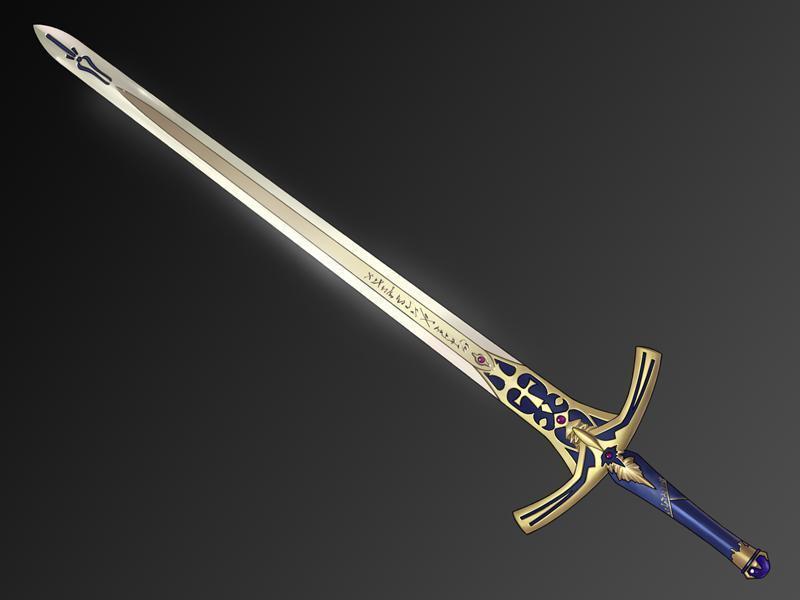
“You changed. You gave up.” The elf’s gaze dropped to the sword across Lucan’s lap.excalibur-fantasy-weapons-4278339-800-600

“Not really,” Lucan said, using the sword like a cane to stand. “I don’t need a sword anymore. Not for the life I’m leading. I thought it proper to return it.”

“Very well.” The elf shook his head. “The hilt shows no wear and the blade remains polished. My guess is that you and the sword remain untested.”

Without responding, Lucan returned to his climb, leaning heavily on the sword as he went. The elf followed. Upon reaching a clearing at the top, Lucan took a long deep breath and looked about. Arched boughs of towering oaks sheltered the space. Splintered light dappled the patchwork leafy forest floor with dancing yellow-green light. The fresh autumn air smelled of pine and rich humus. A bird dipped and, seeing Lucan, stopped in mid-air, gave a warning chirp, and flitted out of sight.

Here three decades before, Glinick the holy man had beckoned the earth with a thump of his staff. A shudder and quake had followed, then a crevice and a tongue of fire bearing the sword Lucan now carried.

This time no holy man greeted him, and there were no miraculous events. Lucan shrugged and drove the sword point into the ground. The sword sank easily, like cleaving soft butter, but on reaching the straight cross-guard, it refused to go further. After several attempts, Lucan placed a hollow broken section of a branch over the exposed grip and pommel. Then he backed away to sit beside the elf on a stone shelf.

“I’ll tell Glinick where to find his sword,” the elf finally said.

“I didn’t want to give up,” Lucan said, “but I never learned how to draw on the sword’s magic.”

“Glinick said you must persevere until the magic finds you then follow the path it points to you.”

“The magic never found me, and now Jill has left me, too. She thought I was a fool for lugging a sword around.”

“Is that why you gave up … your girl didn’t believe in your mission? So you chose to follow her instead?”

“She’s smart, beautiful, sophisticated, everything I want,” Lucan glared at the elf, “and she knows me … knows who I truly am.”

“She knows the version of you that fears to use his gifts.” The elf leaned forward with his hands on his knees. “All talents and skills are magic—gifts from God to help you fulfill your mission, to help you become what you are meant to be. When others tell you not to believe, they are telling you not to believe in yourself and in your gifts.”

The elf stroked his bearded chin then continued. “I suspect if you became what you were meant to be, Jill would not be with you. But your perfect partner would be.”

“I told you, Jill knows me.”

“It would be better if you knew yourself. But perhaps you do.” The elf pointed to the branch section hiding the sword’s grip and pommel. “The earth has not accepted the sword, and the holy man has not come to receive your resignation.”

Lucan pursed his lips nodding then locked onto the elf’s gaze and smiled.

S’kinky

The writing prompt this week was, “Talk to the animals.”

——————————

“Nice day, don’t you agree?” The small voice caught me by surprise—no one else was on the deck. I looked down over the rail and up at the low cumulous clouds speeding across the blue mountain sky. A pair of hawks whirled in the breeze high above.

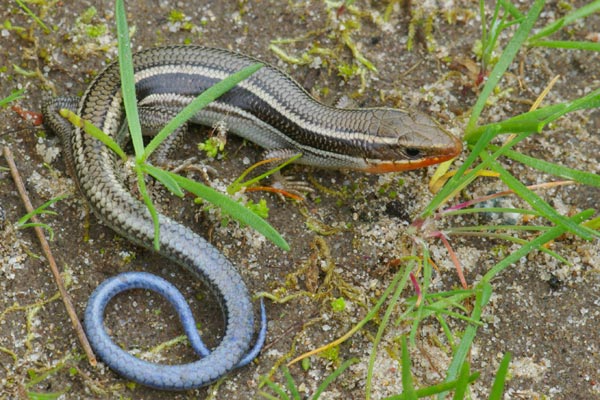
Then my eyes fell upon a six-inch lizard, a blue-tailed skink, perched on the bench beside the picnic table.

“Excuse me. Did you just speak to me?” I asked. The skink bobbed its head and body as if cheating on a pushup. It wag-walked closer.05031302pd_skink

“Yes,” the skink said. “I come out whenever I see you cooking, so I thought we should get acquainted.”

“But you’ve never spoken before.”

“Don’t you think it’s about time? We live in the same forest, practically the same space.”

I pulled over a chair. “I admit, I look for you when I’m out here. It cheers me to see a forest creature on the deck. I’m surprised you never seem afraid.”

“I’m a pretty good judge of character,” the skink said. “And besides, my real enemies—hawks, snakes, raccoons, that sort—won’t come around when you’re here. So I can relax and catch some rays. I always marvel at your great hunting ability.”

“My hunting ability?” I said bewildered—having never successfully hunted.

“Don’t be modest. Every time I see you, you’re roasting some big bird, fish, or animal. No wonder my enemies keep a safe distance.”

“Ah,” I said, getting a sudden intuitive flash. “The sort of hunting I do is called shopping.”

“Shopping?” the skink said and licked its pink tongue across both wide eyes. “Well, it’s very effective. Is it something you could teach me?” I chuckled at the thought of taking a lizard to Food Lion.

A goldfinch swooped across the deck, alighted on a lantern hanger, and hopped around to keep us in view. Considering my recent revelation, I didn’t feel silly asking, “Do you talk, too?” It gave out a short trill followed by two chirps.

“What a handsome fellow,” the skink said, “such a pretty shade of yellow. When I’m older, I think I might become a bird.”

I hesitated to comment. The skink’s admiring gaze at the goldfinch convinced me that it was serious. It never occurred to me that self-aware creatures—other than humans of course—could have identity problems.

“Can you sing?” I finally asked.

“Not a note,” the skink replied. “All the more reason to be a bird.”

“Well, you cut a very fine figure as a skink,” I said. “Your shiny black scales, yellow racing stripes, fiery red throat, iridescent blue tail, they’re beautiful. I suspect any young female skink would love to find you and have your children.”

“I have racing stripes and a red throat?” The skink lifted a foreleg and twisted to look at me. “I’ve only seen my blue tail. You really think I’m an attractive skink?”

“You are like molded polished glass. A work of art.”

The lizard seemed to ponder that thought. “I suppose if I was a goldfinch, I’d have to change my diet. I don’t like seeds. I’d have to sit on branches day and night and never have a cool dark den.” I nodded.

“Hmm, okay,” the skink did a couple pushup nods then wag-walked toward my grilling station. “What’s for dinner tonight?”


For another story on communication with animals see: Aliens Among Us

Declared Sane?

The board declared me sane … or at least not insane. Anyway, I’m back on the streets. I remain confused—the GPS chip in my brain is still broken. Without a functioning Global Positioning System anyone’s position might be valid. So I have to listen to them.

It’s hard to get response timing right: when to nod, smile, clap, laugh, frown, scowl, wince, shout … join in chants. As long as I follow the crowd, I don’t make too many mistakes.

My partner Kay helps a lot. Her GPS chip is locked tight. Last time I chipped up, she covered for me. We were out with another couple. I saw the logo of a dark man riding a rodeo horse and suggested, “Let’s stop by Buckin’ Bronut’s for coffee.” Kay’s friends gasped.

“You drink Buckin’ coffee? They get their beans from San Cuspidor … none of their executives are pangender … they require employees to show up and work … uniforms are non-organic cotton … ironed by non-union employees using starch from a country that had slaves a thousand years ago.”

I was busted, but before I could offer, “Don’t oppressed aboriginal Neolithic victims need jobs, too?” Kay bailed me out. “Good one. He’s testing us, again.” She giggled and pointed at me. They laughed, and I following their lead and kept laughing until my heart settled back.

Sometimes I just want to sit quietly and enjoy a cup of coffee.

Without a mind chip, it’s hard to remember that cold days are always too hot and hot days always too cold, and a beautiful spring day is a sign of impending disaster.

I almost got caught the other night. “You see that?” Kay shouted, pointing out the window. A flying saucer had landed, and space aliens were milling about the back yard collecting samples. This is something sane people aren’t supposed to see.

ufo-saucer“See what?” I said, sighting along her arm with my eyebrows raised. At first she looked shocked then her smile returned. “Nothing, I don’t see anything either.”

Before leaving the window, I checked again to make sure the aliens weren’t coming toward the house. Having seen the saucer, I couldn’t unsee the evidence. So the next day I raked and shoveled to cover up what never happened.

Sanity has gotten easier. “Isn’t that a beautiful sunrise,” Kay said this morning, looking west. “Yes, it is, I said, glancing east at the sun peeking above the treeline, then turning west to smile and stand beside her.

I’ve decided not to get my chip replaced. Insanity makes me more aware of my own individual thoughts. And I actually enjoy hearing the positions of others without a GPS filter.

From now on I’ll just have to listen carefully so I know which way the sun is rising.

What is Mok?

“Mok” concludes this series set on Callisto. Previous related stories are: And To All A Good NightCallisto ConfidentialWho’s Out There?; and Dating on Callisto.

“Mok?” Carly asked.

“Mok is an accelerant produced by the adult svitan,” Dakkar said. “It enables them to survive in Callisto’s ocean and to capture prey. The ‘krill’ you caught in the command center’s water filters are the juvenile, free-swimming form of svitan.” Carly flashed a quizzical smile.

“Let me describe it another way. Think of mok as the ultimate stimulant … or perhaps it’s easier to demonstrate.” He pulled a blistered card from an inside jacket pocket. “These are ten-second doses.” He pointed to one of the clear blisters. Can you spare ten seconds out of your life?”

Carly nodded, thinking her answer was obvious. Dakkar tore two sealed blisters from the card and handed one to Carly. “Keep that safe,” he said. She noted how his eyes followed her hand slipping the sealed blister into the top of her dress.

He pressed an aspirin-like tablet from the second blister and held it up between his thumb and forefinger. “This contains a highly-diluted ten-second dose of mok.” He handed the tablet to Carly, motioned for her to swallow it then lifted his teacup and saucer with his free hand.

After two seconds he said, “Prevent this accident.” He dropped the cup of hot tea.

Carly jumped back and felt suddenly light—the heavy burden of Earth’s unaccustomed gravity had vanished. The dropped cup and saucer stood with tea lapping well above the rim, fixed immobile in space. Everything about her, Dakkar across the table, a bird in flight, the leaves rustling in the wind, stood still and silent. Prevent the accident, she remembered, then slid the saucer under the cup and gathered up all the tea.

Two seconds later Dakkar’s pensive frozen face transformed to a smile. “You just experienced ten seconds in one ten-thousandth of a second.”

“It was like frozen time,” Carly said, checking that everything was moving normally. “Wow. I felt detached from reality. I don’t know if I should be elated or frightened.”

“Both are reasonable responses,” Dakkar said. “Mok could be a boon to doctors or rescue teams in emergencies. Imagine a crisis where everyone had time to walk away—”

“Or a one-person hit squad taking out an army.”

“Exactly,” Dakkar said. “But mok has some serious limitations. It accelerates the user but not the appliance. Physical and chemical reactions outside the body aren’t accelerated, vehicles, bullets, and sound move at the same speed. Even undigested food can’t be processed to keep up with the body’s accelerated demand. That’s how the svitan kill their victims, by hyper-accelerating them until their systems collapse.”

“So I couldn’t overdose and live sixty years in a fraction of a second.”

“It might feel like that, but you’d be in a coma. A pure dose from the svitan’s tentacles would crush your systems instantly.”

“However did you discover mok?”

“The Goorm alerted us and made a business proposition. They also helped us with the Callisto harvesting station. They claim to be the greatest traders in the galaxy. When they detected my team experimenting with the Myseko gate, they made contact. Apparently, interstellar regulations prohibit outsiders from harvesting from systems with sentient beings.” Dakkar smiled. “We must have qualified.”

“What are the Goorm like?” Carly asked, consoling herself that her speculations about space aliens and nineteenth century gentlemen weren’t totally in error … there were aliens, and Dakkar was certainly a gentleman.

“We’ve only met them virtually. The Goorm’s nearest trade base is two hundred light years away. They’re a marine species and look like big crabs. All we’ve talked about is business. They want to expand operations in this system.”

Carly lifted her teacup and carefully guided it back onto the saucer. Her hand shook. “This gravity is wearing me down,” she said with a sigh. “I have enjoyed our time together very much and have so many more questions, but I’m afraid I’ll have to call it an evening. Might we continue this another time?”

“Perhaps next week if you are free?”

Carly chuckled and looked up. “Oh, let me see, I’ll have to check my social calendar.”

s-3ae4743a93bf2992e322ff3ed4d7b747f89b3f8bThey laughed and said their farewells. Dakkar apologized for enjoying her company too much to notice how she was tiring. He and Rachit helped her to the dressing room where she changed to her moon suit in Callisto’s lighter gravity. The cabriolet bench reversed its path and soon returned Carly to the command center where she found her dog simulant Heathcliff waiting with wagging tail.

The next morning she felt as stiff as if she’d chopped down a forest. She swore to redouble her exercise routine and get back on her Cal-Pro meds.

Her report to GSA Hargate was the standard yawn: no problems, maintenance checks normal. She complained about food and boredom because that was what she always did. She made no mention of Roger Dakkar, the Goorm, mok, the Myseko gate, or the Callisto cabriolet. Hargate responded with their standard closure, which Carly suspected was a recording. “We’ll look into the problem. Have a good day, Ms. Shellion.”

Two days later, Carly was completing her tasks and anticipating hearing from Dakkar. Suddenly Heathcliff exploded into a dance of barking jumps. The airlock hissed, the lock released, and three GSA security officers stormed in.

A large man with two silver bars on his shoulder stepped into her face. “Ms. Shellion, I have a report that you’ve consorted with the international criminal Roger Dakkar,” he shouted as if she was in another room. “He also goes by the names Raja Dakkar and Regor Rakkad, and at Ohio State University he was registered as a Nigel Westphal.”

Carly shook her head and kept her voice level. “Captain… ahh Jerk-off,” his nametag read Chertov, “I assure you I’ve not been entertaining international criminals on Callisto. I was hoping to open a casino, but GSA’s been late filling the supply requisition.” She scratched her eyebrow with a closed fist and stole a glance at the officers ransacking the room.

“Don’t get cute, Shellion. We have the evidence,” Chertov said. Carly gave an impatient show-me sigh. “The helmet on your moon suit and that rover,” he pointed to Heathcliff at her feet, “they have sensor transmitters.”

Why you little spy you, Carly thought, noting the glassy glimmer in the simulant’s eyes. Heathcliff never saw Dakkar, and I left my helmet in the dressing room when I went to dinner … so Chertov can’t have much evidence.

“We raided Dakkar’s lab and found these,” Chertov said, reading the display on his palm. “It’s the same conveyance you were riding—”

Carly pulled his hand around to look. It was Dakkar’s cabriolet. “That’s the vehicle the Goorm sent for me,” she said. “But I don’t know how Decker, you say, got the plans.”

“His name’s Dakkar,” Chertov shouted. “And who the hell are the Goorm?”

“The space aliens I met with. The ones who built that,” she pointed to the blueprints, “the ones who built the monitoring station beyond the crater wall.” Carly thought her made-up story sounded better than Chertov’s.

“You met space aliens? Excuse me.” He looked at his palm, held it to his ear, and turned away. “Impossible. No. No. Impossible. Our sensors would have picked up something. So what did you find? Nothing. That’s impossible. Okay, but don’t tell the general until I check the orbiting monitors.”

While Chertov talked, Carly eyed his GSA patch; it was velcroed over another insignia. His boots and moon suit were military issue. He said he didn’t want the general told? GSA didn’t have any generals.

Chertov folded his hand, blew out through his pursed lips, and stared down at the floor.

“They’ve gone haven’t they?” Carly feigned a sigh and a disappointed shrug. Without more evidence her contrived story just might hold up. “It was my fault,” she said. “I should have notified GSA as soon as the Goorm contacted me. But I wanted the credit. We had another meeting scheduled next week.” She kept her voice deadpan. “Now that’s screwed up. The Goorm know our history … were skittish about meeting us … wanted me to be their liaison.” She threw up her hands. “Hell, there it all goes. What’s left at their monitoring station?”

“Nothing. Absolutely nothing. Ice looks like it’s never been disturbed. Isn’t even discolored.” Chertov sat and pressed his forehead into his open hands.

“Want a drink?” Carly asked. He nodded. Then she said, “You guys got here fast. Where’s your unit stationed?” His head snapped up, and his eyes locked with Carly’s. He’d been busted.

“Our Ranger base is orbiting Ganymede. We’ve got too much invested up here to let someone like Dakkar take it.”

“This Dakkar again?” She said and shook her head. “Why would an international criminal come here? What’s in it for him, and where would he get the resources?” Carly asked, as she pulled out a bottle of gin and reached past the cut crystal glasses for plastic cups.

“He’s perfected the Mys—” Chertov stopped then started again. “I just do my job, Ms. Shellion.”

Myseko gate, Carly thought and smiled. She felt a brush on her sleeve and a touch on her hand. Turning it up, she found a folded paper … as if someone too fast to be detected had passed her a note.

She dropped four ice cubes into a plastic cup with four ounces of gin, handed it to Chertov, and excused herself to use the bathroom.

The note was in sepia ink on formal stationary:

Dear Carly,

I’m sorry we have to postpone our dinner. I will contact you when you get back to Earth. Rest assured Rachit will have the martinis and oysters chilled when you arrive.

Your servant,

‘D’

Dating on Callisto

Previous stories in this series: And To All A Good Night ; Callisto Confidential ;  Who’s Out There?

The invitation said the cabriolet would wait five minutes. Carly jumped into her moon suit. She said, “Stay,” to Heathcliff then dashed into the airlock and stopped. Just inside the pressure door stood a metal-frame wood-slatted bench.

She sealed the inner airlock door, depressurized the chamber, and sat on the bench. It backed immediately out through the airlock without the door opening. A near invisible bubble surrounded her and the bench, and separated from the wall of the Command Center bunker. The floating bench stabilized and rotated 180 degrees as the bubble glided away mere inches above the moon’s surface. Oxygen, air pressure, and temperature were benign Earth standard.

Callisto JupiterCarly willed calm, but her senses screamed on panic alert. Leaning back against the bench, she tried to enjoy the ride. The bubble made straight for the object she and Heathcliff had discovered, cresting and descending the ragged crater rim rather than taking the level path. Carly wondered as she scanned Jupiter in the open black sky; how might this look without her helmet?

Ahead Carly saw the smooth chalky protrusion of the metal blister on Callisto’s granular white surface. The bubble kissed the wall of the blister and pushed forward as the wall opened slowly like a waking eyelid. Her bench slid into a hall of closed doors. The wall sealed, and the bubble vanished.

Oxygen, air pressure, and temperature measured acceptable. Carly removed her helmet. Foot stamping told her the gravity remained one eighth that of Earth.

She counted thirty-six closed wooden doors, each with a place name. Most were familiar to her, but Kailash, Aksai Chin, Ladakh, and Tregrosse were not. Only the Virginia door was unlocked and open, deliberately she discovered, finding a hand-written note inviting her to select a dress. Hmm, the dressing room mentioned in the invitation.

All the dresses were fashionable, colorful, and her correct size with shoes to match. Carly laughed. She had no makeup or any way to fix her hair. Cheek pinching and finger combing would have to do. She selected a red satin dress with small black flowers, a scooped neck, and three-quarter sleeves, and low black heels.

A six-panel door with a brass handle opened into a vaulted, sun-lit room. High-stacked windows overlooked a tree-lined valley. She took a breath, held the brass rails on both sides, and stepped out.

She felt the weight increase instantly and locked her arms on the bars like a paraplegic re-learning to walk. Her body swayed, searching for a center of balance.

“Welcome, Miss Shellion,” an accented voice said. She looked up at a dark complexioned man in a white turban, short blue vest, and loose red pants tucked into high boots.

“Please,” he said and extended his arm.

“I just need a moment,” she said, taking his arm and trying a few steps.

“Raja Dakkar waits for you on the terrace.”

“Roger Dakkar?”

“Yes, shall I bring your martini?”

“That would be lovely.” She shifted her hold from the man’s arm to the doorframe and the rail leading out to the terrace.

A tall formally dressed gentleman rushed to her side and helped her to a low seat along the terrace wall.

“Thank you,” Carly said, her legs shivering. The man’s face was dark, his hair raven and brushed back into a mane. He was lean, athletic, and angularly handsome. His obsidian eyes glistened reassuring confidence.

“Mr. Dakkar?”

“Yes, Miss Shellion. It was so good of you to accept my invitation.”

Carly stroked the edge of her chin and found herself lost for words. Still shaking, she took in the Earth-like mountain valley around her, the gentle breeze, and the scent of a forest in summer. The turbaned man brought a tray of martinis, raw oysters, and biscuits. She lifted her glass to Dakkar, he lifted his, and they sipped.

Perfect taste, perfect chill. She looked across the stone terrace wall, up to the tree-lined horizon then down to the valley floor. Every detail perfect.

“I suppose proper etiquette requires we begin with polite banter,” Carly said, finding her voice, “but at the risk of being curt, how can this be? This space inside Jupiter’s moon, your wall-traversing cabriolet moon-walker, this gravity, these fine amenities,” she raised her glass, “thank you very much, this virtual scenery? Are you human? In what century are we?”

Dakkar’s somber expression dissolved into charming smile lines. “I’m quite human, and we’re still working on time travel.” He took a savoring pull on his martini. “I’m afraid that to understand all you’ve seen might require a great deal of unlearning. Physics and philosophy are heavy dinner topics. Might we wait until later, after another drink?” He touched the rim of his martini glass, and the turbaned servant replaced it with a fresh one. Carly waved that hers was fine.

“My name is Roger Dakkar. I am an entrepreneur. I’m here because I have major business concerns on Callisto.”

“Did I hear your servant refer to you as Raja?”

“Rachit worked on my family’s estate in India,” Dakkar said, sliding an oyster from a chilled shell onto a cracker which he handed to Carly. “Do try this. I confess I checked your food preferences before sending you the invitation.”

“You know my food preferences, too?” Carly scowled and ran her hand along the line of her chin. “I’m at a bit of a disadvantage here.”

“I know this was sudden, but I thought explanations would be easier after your visit. Go ahead. Ask me what you will.”

“What is this place? How can it be so … so Earth-like?”

“Because this is Earth.” Dakkar waited for her next question.

“I see,” Carly said and pointed both index fingers. “So you don’t have a time machine, but you do have a teleporter.”

“Not a teleporter, but yes, our Myseko gate operates like a teleporter.”

“Where did you get it?”

“Viktor Myseko is on my discovery team. We discover what is already created. We believe that if one looks for it, the path of discovery is clear. All math and science link to it. Edison and Einstein both talked about following existing paths. Needing to see oneself, one’s institution, or one’s government as the ultimate creator is a great stumbling block.” Dakkar opened his hands and gazed upward. “What you see here is low hanging fruit generously provided. Reach out, and the products present themselves.” He looked into Carly’s wide expression. “Shall we eat?”

Rachit cleared the martinis and oysters and brought the first course of young greens, pecans, sheep’s milk cheese, and tomatoes. Crayfish chowder and seared foie gras followed then the main course of braised Strauss duck.

Carly found out that Roger Dakkar was twenty-nine. His father was Indian and his mother an American from Cincinnati. He had dropped out of Ohio State University and founded a successful software company. He became fabulously wealthy and run afoul of the US government when he refused to reveal his coding techniques. Labeled dangerous and greedy, he escaped the country before his assets could be seized and was joined by a host of similar outcasts.

“Who is John Galt?” Carly teased.

Dakkar laughed. “I believe Ayn Rand had my grandfather in mind when she wrote Atlas Shrugged. They were more than friends for years.”

The dessert was Cherries Jubilee served over vanilla bean ice cream with splinters of dark chocolate on the side.

“Could I—” Carly started to ask for tea as a cup was set beside her and a pot of tea poured. She studied it, lifted it to her nose, and shook her head. “White Bai Hao Yinzhen tea. Mr. Dakkar, you do amaze me.”

“Thank you, Miss Shellion. That was my intent.” He gave a head bow.

“You said your business brought you to Callisto. What business might that be?” Carly asked and took a bite of her ice cream and cherries.

“I hold the interstellar charter to harvest Mok on Callisto,” Dakkar said.

The next story in the Callisto series is: What is Mok?

Who’s Out There?

The immediate predecessor to “Who’s Out There?” – Callisto Confidential

A previous related Callisto story – And To All A Good Night

Carly examined the two martini glasses closely. They were radiant crystal, beautifully cut, and perfectly matched. Under magnification she found no identifying trademarks.

There were also no labels on the gin or vermouth bottles and no markings even on their concave bases. The stoppers expanded when inserted into a bottle’s neck and contracted when torqued for removal. Pulling all the bottles from the packing case, she found at the bottom a small jar of cocktail olives and a white paper envelope.

Carly slid her finger under the envelope’s paper seal. “Curiouser and curiouser,” she said, as she read the invitation.

Dear Miss Carly Shellion,

You are cordially invited to dine with Mister Roger Barca Dakkar at his estate tomorrow evening at seven o’clock p.m. GMT. A cabriolet is being sent to collect you at quarter to seven. It will wait five minutes.

Your servant,

‘D’

P.S. When you leave the dressing room you will want to hold the brass rails with both hands.

The letter was written on formal stationery in sepia fountain pen ink. Hmm, Carly thought, the estate of Roger Barca Dakkar—Esquire, no doubt. She laughed and shouted into the air, “Have I gone mad? I’m afraid so, but let me tell you something, the best people usually are …” Then she whispered, “At least according to Lewis Carroll.”

Carly scooped her stainless Global Space Agency tumbler into the ice maker, added three parts gin to one thimble vermouth, stirred, strained the contents into one of the martini glasses, and added two olives. She pulled her faux leather and aluminum frame chair close under the light, and reread the invitation with the contemplative advantage of gin.

From the angular stylized hand and composition, she might guess the author came from the 19th century. She glanced at the book-marked page of Pride and Prejudice still displayed beside her bunk. Mad indeed.

Carly filed her usual morning report, according to routine. “Hargate, this is Carly Shellion checking in for Callisto Command Center, GSA Jupiter mission. Nothing new to report. Everything is running at optimal.

“The moon rover you sent, which I’m sure you guessed I’m calling Heathcliff, worked perfectly—both as a sensor platform and as a canine companion. Thanks again for that. He’s charging now. I’ll be taking him out on my rounds later.

“That’s all for now. Carly Shellion is signing off.”

She was already having second thoughts about not mentioning her “alien” contact and invitation. What was a cabriolet? A single-axel one-horse carriage, as any romance reader knows … but what was it on Callisto? Why was there a dressing room? And why should she mind the brass railings?

She glanced off the page at Heathcliff sitting expectantly at her feet. Immediately, the dog-simulant moon rover burst into a spinning dance of wags, jumps, and lunges toward the airlock. “Okay boy, time for our walk.”

640-jupiter-from-callisto

Carly ran through the pre-walk safety procedure then stepped out onto Callisto’s surface. The temperature was steady at -142 °C. Non-twinkling rhinestone stars studded the black velvet sky, and Jupiter’s disk shone like an orange tennis-ball above the gray-white ridgeline. Far off on the opposite horizon, the Earth-star and diminished sun felt less significant.

Carly completed her rounds without incident. Although it was almost six hours until dinner, she chose to return to the command center rather than extend her walk. The questions that had haunted her last night provoked disturbing answers.

What did she know? There was another presence on Callisto, and it was probably not from GSA. Could the government have another space program? If so, it was better funded—a well-stocked bar, provisions for unscheduled guests, and who knew what else?

The invitation was a romantic anachronism, handwritten in ancient ink on real stationery. She had no idea these things were still made in this century.

Unable to come up with any logical scenarios, Carly decided she needed to prepare for the illogical extremes.

Aliens were monitoring Earth, probably from a distance of two to three hundred light years. That would explain why they were out of date. Before making contact, they’d studied our language and culture. To avoid misunderstandings, they’d try to mirror Earth social amenities, thus the gifts of glassware and beverages. For first contact, they’d select an isolated person, probably a scientist. They’d watched while we built the Callisto Command Center and built one nearby. And … and they needed handrails, why? It is unlikely that their planet has Callisto’s gravity, one eighth that of Earth. So they installed artificial gravity on this station and are warning me to be prepared. I hope it’s not much greater than Earth’s.

Shaky logic, very shaky, Carly thought, bouncing her fingers together repeatedly on opposite hands. But it connected all the data points.hansom

Considering the opposite extreme, I’m about to meet a nineteenth century gentleman wearing a frock coat and a top hat whose horse and buggy transports him across time and space … or maybe I’ll meet Alice’s Mad Hatter himself.

Heathcliff sprang to his feet and ran barking to the airlock. It was quarter to seven. Her carriage had arrived.

The next story in the Callisto series is: Dating on Callisto