Feeling a Draft

“Back to work, Turd,” the guard whacked my head, “or you’ll get another beating.” A string of obscenities followed. I was a useless pile of excrement and began to believe it. The threat pulled me back sharply. Three days of work had brought me nothing but lost sleep. Today? More plodding with no end in sight.

My only breaks came when I was pulled in for interrogation. They refused to believe my story. Who was I? A writer? They laughed. What had I written? Was I holding back? No, because I was a liar, a fraud, an imposter. If I fessed up, they’d go easier on me.

One guard was friendlier—or pretended to be. She pleaded for me to give her something she could use, something believable, so she wouldn’t have to hurt me again. Reaching across the rough-hewn, wooden table, she set a tumbler in front of me. She swirled the glass in my face. I smelled vodka.

Want it? Give me something, something interesting, something I can use. She couldn’t abide another bore. All she’d seen from me were tiresome lies and fabrications. My story was full of holes, a mess of contradictions. Maybe if I was interesting, she might give me a break. She scooted the vodka closer.

I raised an eyelid, almost laughing. “Interesting and believable? Right now, I can’t be either. If you would just tell me what you want.” I opened my hands toward her, hating myself for being so pitiful. I shifted in my seat to relieve the pain of long sitting.

She reclaimed the vodka, tossed it back then dismissed me with a final skewer. “Admit it. You have nothing to tell us because you are a crashing bore. Be honest, and this can all be over.” I hung my head and returned to work.

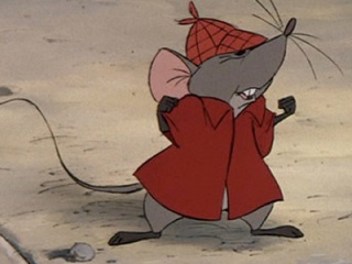
My mind was slipping, but I didn’t care. Insanity would bring me some relief. When a guard squeezed through the food slot dragging a miniature table and chair, I didn’t blink. It wasn’t the usual guard. It was a rat dressed in a rumpled, brown trench coat.

Slide1“Sorry to disturb you, sir.” the rat said in the voice of Columbo, Peter Falk’s TV character. It touched its forepaws gently together then held them aloft. “I hear you’re some kind of a writer. You must be very smart. Could I maybe get your autograph … not for me … for my wife … she is a big fan … would never forgive me … myself, I don’t have time to read.” It went on and on, worse than the usual interrogation. Finally, it ended.

“Just one more thing. Sure you don’t have something you want to tell me?” It smiled, raising its eyebrows along with its paws.

I felt a sudden draft in the room. “Maybe I do have something,” I said, “but first let me give your wife my autograph. She’s been something of a muse.”

“Oh, that would be wonderful, sir. Thank you very much. She’ll be so pleased to hear that.”


I completed the draft, and my story was accepted. The torture ended, and I could breathe free again. At least until the draft for my next story was due.

Public Enemy #1

To avoid prosecution, I have to confess everything before midnight—that’s when the Artificial Justice Law goes into effect. And since litigation is still pending on Thought Crimes United v. Humans, I’ll go ahead and get a few things off my chest.

The AI judges don’t understand this, but crime is a kick—all crime. That’s right, I just said that crime is fun. If you’re not eaten up with fear of getting caught, it’s a very heady experience.

So, let me say at the onset, I am NOT sorry for any of my virtual crimes. Not a thing. Not watching VR porn. Not stealing others’ virtual stuff. Not sabotaging avatars or jacking the program to make them perform obscene acts. Am I the only one who can admit this? Do I hear crickets? Is everyone out there posturing righteous shock while they jack or otherwise abuse non-player-characters and avatars in a closet?

Let me point out some advantages. Besides entertainment, I get material things. Okay, they’re virtual, but I don’t have to pay or work for them: extra lives, magic artifacts, cool weapons, complicit bed partners—more or less, at least after I tweak their settings.

Taking arrogant assholes down a peg is also very affirming—very ego boosting. You know the ones I mean: the rich Dudes and Duch-asses that buy status without actually solving or slaying anything, the ones who take Tiger tanks to fight cave-dwellers, or who bribe the tech to open a backdoor to level 36 then wait to ambush you with a pawnshop-purchased Nuke-A-Mega-Power-Wand that would make Lord Voldemort proud. You can only imagine the horror on the too-beautiful face of #my6y* when my submission tool bent her into full bondage posture and flipped her over. Ooo baby!

Yes, I used her real tag. That’s so you can contact her and tell her what a pussy she is. Unlike a true online warrior who would have demanded a rematch, she ran to her rich daddy and got him to bribe, I mean lobby, Senator Pokesnout to pass the Artificial Justice Law. My creative programs became Exhibits A thru H for artificial abuse and thought crimes.

I confess I may have been a little arrogant myself. While I played with #my6y*‘s pneumatic avatar, I hacked her friends and made them watch. Okay, so I programmed them to jump up and down, clap, and shout encouragement.

The new law is crazy. What is virtual? The Artificial Justice Law is pretty vague on that point. Are crayon trees virtual trees and finger-painted houses artificial? Looking at naughty pictures of Elmer Fudd carries the same penalty as sexual assault. If your daughter draws stick figures, make sure she puts pants on them. And your five-year-old boy should know that the alphabet building block with the “L” on one face looks like an automatic, high-powered, .45 caliber, assault pistol that will turn him into a school-clearing serial killer.

Ahh, I feel so much better. It’s still a few hours to midnight, so I’m going to play every game I have that’s on the forbidden list. Then I’ll work on my virtual stealth program so I can get around their Artificial Justice Law.

Catch you later in my XXX virtual dungeon.

AI Gingerbread

“Hey, will you stop that. You hear me? Ouch. One more step, my mate and I will give you such a pinch.” I looked down at my sandals and grimaced.

“All right. Shut up already.” I removed the sandals, left them in the grass, and walked barefoot across the driveway’s sunbaked asphalt.

“Ya gonna jus’ leave us here?” a sandal screamed and kept on. I ignored it and hopped into my new Cherry Motors Smartcar.

“Where shall we go, Mr. Heartless, SIR? I saw what you did to those poor homeless sandals.” The dashboard glared red.

I bit my tongue. Whose idea was it to make everything sentient? They couldn’t imagine shoes not wanting to be walked on or cars thinking we treated them like rickshaw coolies? And what AI ignoramus programmed all the outrage politics?

“Away,” I said. “I need to get away from all you AIs telling me what to do.”

“Away isn’t in my road atlas, SIR. Would you like to key it in manually, YOU INSENSITIVE TYRANT?”

“No. Take me to Hikaru’s Gastronomicon.”

“You are already too fat, Mr. McNasty. Much as we’d like to see your heart clogged with recycled sewage, our program compels us to warn you. Besides, you have to mow the grass and fix the latch on the front gate.”

Why do they all sound like angry spouses? I thought. “OKAY, I’ll mow the grass. First take me where I can get something for this raging headache?”

“We carry a full pharmacy as part of my comfort suite, but you must go rescue those poor sandals you abandoned. Seeing them alone out there on the grass sets my armature to wobbling.”

“Sure. Open the door.” The access slid smoothly up over the roof. Two quick steps on hot pavement and I was on the grass, scooping both sandals up by their ankle straps, and returning to the house.

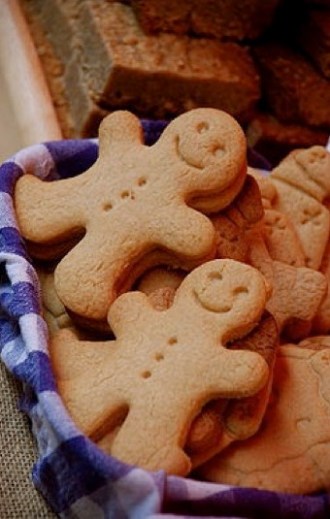
“What now, Sluggo?” said the mouthiest sandal. “Ya gonna plant your ass in a soft chair and drink beer all day?” I left the sandals on the ottoman and went to the kitchen. My wife had baked several dozen gingerbread cookies and left them on a tray for their frosting mouths and buttons to dry. When I reached for one, it jumped.Slide1

“What you tryin’ to do, fat boy? You know who I am? Run, run, as fast as you can, you can’t catch me, I’m the Gingerbread man.” With that he leaped off the tray, ran down the counter, jumped over the sink then onto the kitchen table.

“Well come on, lard butt. Aren’t ya even gonna try?” It laughed and ran circles while the fruit bowl chanted the Gingerbread man rhyme.

I snapped. Without thinking, I grabbed up the next piece of gingerbread by the leg. The laughing suddenly stopped.

“What you gonna do, Mister?”

“Have myself a little snack,” I said, sliding the gingerbread head into my mouth.

“No, don’t. That’s Ginger girl. Please, take her out of your mouth. If she gets soggy, her head will fall off.” I smiled.

I scooped most of the ginger kids into a plastic bag and put the rest, along with Gingerbread man and Ginger girl, to work mixing and baking non-sentient ginger disks. I scraped off their frosting mouths to keep them quiet.

After they’d baked a couple dozen trays of ginger cookies, I released half of the Ginger family. I held the rest in case anyone talked.

IMG_1321

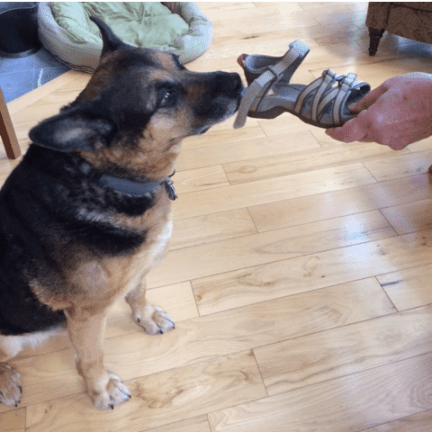
A loud bark came from the living room, followed by growling and screaming. I ran back to find my dog Freya standing over the sandals, drool dripping from her fangs as her snout explored the sandals’ stitching.

“Hey, fat guy,” said one sandal. “Get this flea-magnet outta my sole.”

“Oh, my,” I said, shaking my head as I lifted and held out the sandal. “You see, Freya’s already destroyed both of her chew toys. I promised her a couple new ones. She just assumed you two—”

Life got much easier after that. I now eat cookies baked on demand, I walk in comfortable, silent shoes, and, after teaching Freya to tear up upholstery, I’ve come to an understanding with my car.

The Child Has Good Instincts

“She has sad eyes,” the four-year-old girl said, tapping Terrell’s crossed knee and watching the creature on the examining table. “Can I show her my dog?”

She was the beetle Professor Terrell brought back from his travels. The shiny black Madagascar beetle tipped the scale at 176 pounds. Her six splayed legs drooped over the table edges. The beetle’s compound, black eyes glistened under the lamps. Smaller simple eyes glinted along its dark-bristled forehead.

Without lifting his eyes, Terrell nodded and pointed an index finger from the touchpad.

Little Jenny dashed to the lab table, carrying a squirming golden retriever puppy in her arms. “Want to play with Chloe?” she asked. She offered the puppy to the dark, horn-ridged creature. Terrell noted the time and turned on the recorder.

The beetle touched the sniffing puppy two or three times with its antennae then extended a clawed forward leg. Chloe leaned into the outstretched claw, stretching to better feel the saw-toothed edge comb across her back and down her rump and tail.

Jenny laughed and said, “Chloe likes that.” She sidled up close to stroke her dog’s head and look into the beetle’s eye. “Can you talk, Mister Beetle?”

The beetle ratcheted a few squeaks.

“It’s okay if you can’t. Mommy says I talk enough for two people. I talk to Chloe all the time, and she never says anything. Some of my stuffed toys talk, but you have to squeeze them.”

“Aaaaa,” Jenny’s mother screamed and raced into the room. “Jenny, don’t.” She snatched up her little girl then backpedaled, keeping her eyes on the beetle. The beetle arched one antenna in her direction. Chloe curled tight and closed her eyes as the beetle continued smoothing and stroking her coat.

The mother screamed her outrage at Professor Terrell. “How could you let such a thing happen? Put my precious little Jenny in such terrible danger?” The professor shrugged and made another note. “I’m calling the police. I’ll have you investigated for child endangerment.”

She looked down at Jenny, nearly crushed in her tight-wrapped arms. “Are you okay, my darling? Did that nasty, nasty thing harm you? Oh, when I think … oh my, what it might have done, killed you, eaten you.”

She pressed the back of her hand to her lowered face then glared at Terrell. Waving to the beetle, she said, “We don’t know anything about this, this awful thing.”

“We know it likes Chloe, and it likes me,” said Jenny, wide-eyed and smiling. “Mommy, could you get me one? Please? It’s very sweet.”

Her mother winced, baring her teeth. Jenny wiggled free and ran to the beetle, handing it the fuzz-stuck, lime lollipop from her pocket.

Professor Terrell made a note. “Observation: the child has good instincts as does the dog. Unlike the adult subject, they appraised the situation with open minds.”

Remember Me?

A wave crashed and rushed up the sand-packed beach, sending me backpedaling in my worn canvas deck shoes. The late-morning mist moistened my face as I followed the receding wave back down the slope. Streams of bubbles in slow-draining depressions pointed where sea creatures were buried, clams and crabs, fun to play with when I was a kid.

The high tide left dimples in the sand and debris—half-buried shells, the upturned carapace of a horseshoe crab, driftwood, the base of a broken, brown bottle, its edges grayed and smoothed dull by the waves. Strands of seaweed, clinging with shell life, swept up and back with the waves like green, soaked banners. A gusty breeze scented the air with whiffs of the organic, salty sea. A screeching tern tilted its wings and forked tail to the wind and touched down just long enough to overturn an empty clamshell.

Down the beach, my uncle’s piling-mounted house was a gray and tan outline in the spray-driven mist. My uncle had died last month, and we were putting his house on the market. This might be my last visit. The porch light went off, so I knew Janet was awake. She’d said she wanted to join me to watch the sunrise, but the sun had already climbed and shed its morning orange and red.

Back at the blanket, I shook the coffee thermos. Hearing nothing, I unscrewed the cap, tipped the thermos, and caught three brown drops in the plastic cup. Perhaps Janet would think to bring more. I set the thermos on the sandy blanket beside an unused, maroon, ceramic cup.

“Mr. Drake, hello,” a small voice cried. A boy six or seven, standing ankle-deep in the surf, waved his clam trowel then broke into a run up the beach toward me. He wore bright blue, boxer-style swim trunks and a yellow, Cub Scout t-shirt emblazoned with a blue wolf badge. I didn’t recognize him, but he knew my name. He must be mistaking me for my uncle, I thought.

As he got closer, I saw the trowel he pumped in one hand had flecks of rust, and his other hand held a red plastic pail. They looked like the trowel and pail I played with when I’d visited here. Perhaps the boy had borrowed them from my uncle.

“Mr. Drake, Sir,” the boy stopped, huffing, and craned his neck up to look at me, “Wanna see what I found?” His bare toes flexed nervously in the sand.

“Sure, young man,” I said, doubling my legs to crouch and peer into the small pail he tipped toward me.

“This one’s my favorite,” said the boy, handing me a concave shard glistening with blue, iridescent mother-of-pearl. “I’ll give it to my mom,” he said. “This one’s nice, too, almost perfect.” It was a salmon-pink sand dollar over four inches across.

A small sand crab tried to bury itself in the sand at the bottom of the pail. “I just picked him up to look at him,” the boy said. “He’s scared, so I’ll put him back.”

The boy grabbed the scuttling crab, set the pail down, and ran to the water’s edge. I shook sand off a corner of my blanket and sat, waiting for his return. A pair of terns took an interest in the pail, hovering and dipping, rocking in the breeze, so I pulled it onto the blanket. “Craw,” one protested, and they both climbed off with the next gust.

I hadn’t seen anyone on the beach that morning and didn’t expect anyone except Janet. The boy seemed to appear out of nowhere. I watched him set the crab down and rush back.

“I started searching for shells over there,” the boy said, pointing. I followed his finger but couldn’t see anything. “By the pier and the old tower.” The boy squinted. “It’s really hard to see right now. My uncle said navy guys came to the tower to look for submarines. That was during the war. If they saw anything they had a boat with guns at the pier. I know you’ve been there.”

“Yes, I have,” I said, a little surprised at the boy’s certainty. “My uncle told me about the submarines, too. But they took the pier away years ago, and all that’s left of the tower is the foundation.”

The boy nodded quickly. “But I remember when they were there. It was a good place to hunt for crabs and stuff like that.” I smiled, excusing his confusion. The tower and pier were gone years before the boy was born. He must have heard stories and imagined the rest.

“I suppose there aren’t submarines anymore,” the boy said quietly and lowered his still pointing finger. He kicked sand back with his foot then made a groove in it with his toe.

“The Navy sold that land,” I said, “and I heard the new owner wants to put up a Ferris wheel, a roller coaster, and some sort of go-kart track, maybe a paint ball arena, too.”

The boy’s eyes lit up. “Will you bring your kids to play?”

“My wife and I don’t have children,” I said.

“You should get to it,” the boy said, again surprising me. I was sure he was thinking about friends to play with.

“Maybe we should,” I said then asked. “Do you live around here? You seem to know my uncle.”

“I’m just visiting, like you, and staying with my uncle … he’s a very nice man, but he gets kinda grumpy. My mom says it’s ‘cause he got old. I don’t want to get old if it means I have to get grumpy and can’t go out to play. What good is it? I know if he played it would cheer him up, but my mom says he won’t do it. All he thinks about is busyness.”

“You mean business?”

“Yes,” the boy said, then looked seriously at the sun. “I have to go.”

“Will you be back tomorrow?” I asked.

“Yes,” he ran, turned his head, and called back. “But if I come tomorrow you might not recognize me. I’d like it if you did. Maybe we could look for shells an’ stuff.”

“Roy,” Janet’s voice called behind me. “Sorry I’m late. Your sister was on the phone, and we got talking.” She held out a fresh thermos. “Your sister wants to know if you’ve changed your mind about selling your uncle’s place.”

“I was just talking—” I started to point but, looking up the beach, couldn’t see the boy. Rushing waves swept over the last of his footsteps. “A local boy was just here playing in the surf.”

“A neighbor?”

“I think so. His family might have a place up here. He thought I should know him, but I think he was confusing me with my uncle. The boy said I’d see him tomorrow but might not recognize him. Very curious.”

“What did he look like?”

“Your average, pale, city boy, seven years old, active blue eyes, talkative, precocious. He wore a yellow Cub Scout shirt just like I wore.”

“Bright blue, boxer trunks, bare feet?” Janet asked. “Shock of rumpled brown hair … carried a rusty shovel and a red pail?

“A rusty trowel. Yes.”

“You might still know him.”

She led me back to the house and up to the bedroom where I stayed when I’d last visited my uncle. The room hadn’t changed. There was the wood-framed, single bed with the hand-stitched, cowboy-themed quilt, ruffled, blue-checked curtains framing the one window, and a quaint, varnished, knotty pine dresser. On the wall above the dresser was my picture when I was seven, standing on the beach in my Cub Scout shirt and waving a rusty trowel. The ink-scribbled inscription read, “Remember me and our good times. Your Uncle Al.”

Janet squeezed my hand. “You still have a good imagination.” I started to speak, but my jaw just dropped.

Janet squeezed my hand again. “I’m sorry. I told your sister before I told you. I wanted it to be a surprise.” She looked up into my eyes. I knew the look.

“A baby?” I asked. She nodded, and we both smiled.

“I got the message,” I said to the boy in the picture. “I’ll tell my sister we’ve decided keep the house. Our kids should have a chance to play here, too.”

Full Credit

You came to the Interstellar Convention to obtain three credits toward your Alien Studies degree. Few women attend the convention, but you meet another female at the evening mixer. She is an exchange student from the little known planet Filindora. You see in her an opportunity for advanced research.

Her body gleams like smooth, polished obsidian. She touches your elbow with a three-fingered hand then slides it up along your arm to brush a strand of hair back from your shoulder. You blush. She caresses your glowing cheek and bare neck. You swallow and fight the impulse to hide your blushing.

Loud party talk and laughter fade into the background. Boys shouting over beer pong, girls singing karaoke, acrid pot and cigar smoke, everything drifts away. This exotic female is choosing you. You hope the magic never ends.

She wants to see Manhattan’s skyline at night and asks about the view from the rooftop. You swallow again. Alone on the rooftop at night? You know what she wants—the same thing the college boys want and your sport-minded professors. You know if you demur, she’ll find a girl more willing. You widen your eyes, smile, and nod. Her mouthparts quiver. Her jewel-like, faceted eyes glitter in her forehead.

When you reach the roof, she wastes no time. Her delicate, three-fingered hands caress your ears, throat, the nape of your neck, and stroke your long hair. Her sinuous tongue touches yours. Her mouthparts pull on your lips. Your blouse comes off, and she moves lower on your body. Other hands slip to your waist and hips, and downward, carrying away the last of your clothing.

She is unfamiliar so you guide her ovipositor. As she gently rocks, you feel her eggs slide into you. You sigh, half-close your eyes, and roll back your head. Your friends at school will be so jealous. She’s choosing you, you think, as you rock and savor every stroke.

All too soon, the Filindora female withdraws and relaxes. Then she leans close. Expecting a kiss, you part your lips. A clear needle arcs from her lower mandible, through the roof of your eager open mouth, and up into your brain. Bliss. Her liquid love will pleasure you as long as her young feed on your organs, then you will die.

She tells you her name and you remember that you know it. It is a very ancient name. Then she leaves you naked and alone on the dark rooftop. Your distended belly feels like a living pouch of sweet larval jelly lumps.

In your hazy gratified state you wonder if the beetles’ gestation will last long enough for you to earn full credit in Advanced Alien Studies.

Both Sides Now

Until I died, I hadn’t noticed I’d been living in a bubble. Aging and death were unknown to me. But looking back I might have seen it coming: the pressure in my chest, losing mobility in my limbs, every movement meeting greater resistance. The tightening increased toward the end. Then came intense pain, in my head, all over my body. My world went into convulsion. Whatever I’d deemed important no longer mattered. Everything shrank down to that single moment in time. When a light appeared above my head, brighter than anything I’d known, I went to it. Hands reached down and lifted me into the light. And I took my first breath.

May your bubble rise and in the fullness of time burst in glory on the surface of heaven. – “The Navigator’s Dream”

Lord of the Towels

TWEET! “Okay, guys. Hit the showers.” Coach Felbrook circled a raised fist high then pointed to the locker room. Forty boys on East Junior High’s football team let out a yell, unsnapped helmet chinstraps, and headed off the grassy field.

Felbrook jogged behind them, shouting. “Dak, good work on those cuts. Yogi, keep working on power pulls … the defense is still playin’ off your blocks. And hey, Toby … grab the ball cart.” Felbrook caught the eye of the last boy still sitting on the bench and pointed far up the field.

Toby Eagleton jumped up. The hot sun and muscle sweat felt good as he dashed 80 yards to fetch the cart. He imagined running for a touchdown, threw himself across the goal, and rolled to his back, pumping his fists in the air. The new mown grass smelled delicious.

“Toby,” the coach shouted, motioning him to hurry.

Toby scooped up three loose footballs, tossed them into the wheeled cart and spun it back to the field house. Felbrook stood at the entrance. “Water bottles. Don’t forget the water bottles and the cooler.”

Toby swung wide up the sideline, snagged eight plastic bottles off the turf, tumbled them into the cooler, and slid the cooler under the ball cart. Reaching the field house, he pushed the cart into the storage closet. He clanged the metal door shut, dropped the latch, and snapped the padlock.

The blue and black tiled locker room reeked of boy sweat and grass stains, and the even stronger scents of chlorine and mildew from the pool next door. As Toby walked in, the last players were spinning off shower spigots and stepping past him to grab towels. Steam billowing from the showers filled the locker room.

“Good effort out there guys. Toby, lookin’ real good.” Felbrook patted his shoulder. “Damn! Hey, you guys, pick up those towels. You raised in a barn?” No one paid him any attention. “Toby, can you make sure all these towels get into the bin. Thanks.”

“But Coach, I didn’t play. I sat on the bench all practice.”

“You need to learn the system, Toby. Watch the other boys. Your chance will come.”

Toby looked straight up at the neon ceiling lights. “Coach, maybe I could walk through some drills, huh? Maybe run a few practice plays?”

“Great spirit, Toby. Love that attitude.” Felbrook checked his wristwatch. “Sorry, gotta split, teaching a hygiene class in two minutes.” He pulled a gray letter jacket with the bulldog team logo over his dress shirt, and ducked out into the hallway.

Toby untied his cleated shoes then stripped off his jersey and pants. Sun-sitting sweat had a fouler stink than clean workout sweat. His clothing bore no green streaks or clumps of brown. Toby dropped his uniform in his locker and padded barefoot across the wet floor to the showers. Only a few boys remained, combing their hair and tying shoes.

Toby passed a full-length mirror and paused to scowl at his skinny nakedness: five-foot-five, 116 pounds, and red hair hanging like a fruit bowl. His coat-hanger shoulders rounded onto his concave chest. His stick arms and knobby knees reminded him of chicken bones. Some football player. He remembered his Mom saying, “You’ll get your growth spurt, Toby … you’re just late blooming. Just wait. It’ll come.”

“Yah Mom, I’m waiting, still waiting.” He started to punch a locker door but thought better and stepped into the gang shower. He turned the spigot handle, felt the rush of hot water, and gathered liquid soap from the dispenser.

SLAM! Came the sound of a metal door. Someone had crashed into the locker area. Toby recognized the muffled laughter and whispers. No one else sounded like Dak Jackson and Yogi Grancourt. Then came a squeal and the clickety-click of casters as the towel bin accelerated across the tiled floor. The locker room door slammed again. Toby turned off the water and walked out to the towel shelf. Nothing.

“Hey, you guys take the last towel? Hey, I’m still here.” Toby glanced at his locker hanging open and empty. Spinning, he checked the room … no clothes … no towels … no towel bin. “Damn you guys … Yogi? Dak? That you?” He slumped, dropped his chin to his chest then went to gather paper from the toilet stalls to dry off.

Pausing, he looked up and thrust his arms toward the neon ceiling lights. “God of towels, where are you? Why have you forsaken me?”

SHHHHLIIIK! It was the sound of a towel snapping. Warmth wrapped Toby’s hips and tucked a fold at his waist. What? He dropped his hands to find a towel wrapped about him. Not a threadbare gym towel, but luxurious, the brightest white towel, the kind bikini babes rub on themselves in fancy resort movies.

“Toby, me lad. I oonderstand you haff need for a towel?” The Irish brogue was high and lilting. Before him on the dank tiles, stood a figure a head shorter then he. It was pale with pointed nose and ears, a scruff of unruly black hair, and laughing eyes over angular, high cheekbones.

“Who are you?” Toby asked, stepping back.

“For certain, I am the very god you beckoned, the god of towels, here to ease your pain.” The fellow danced two quick steps then bowed, thrusting one leg forward and dropping one arm low.

“I didn’t call you,” Toby objected, gesturing his hands out. “What kind of god is a god of towels anyway? What can you do?”

“Well, for starters, you might haff noticed, I can coover oop your privates.”

“Okay, that’s good … I appreciate that. Thank you. I gotta go, I have class in, ahhh, six minutes.” Toby ran to the door and peered into the hallway. No clothes no towel bin. Opposite the boy’s gym he saw Sheila Palo leaving the girl’s gym, her books clasped tightly against her white, junior varsity cheerleader sweater.

“Pssst, Sheila?” Toby slid out the door to the recess from the hallway. Sheila covered her chin-dropped mouth.

“Toby? How come—?”

Toby waved her quiet. “The boy’s towel cart, is it in the girl’s gym? Maybe some clothes and shoes are on it? Please.” He gestured to his condition.

Sheila set her books down in the hall and returned a second later with the cart piled high with the last of the fresh towels, a pair of blue jeans and undershorts, a sweatshirt, tennis shoes and socks, and his sweaty football uniform.

“Thank you, me love,” Toby let that slip. Damn. She can’t know how I feel about her. He’d never talked to Sheila, but right now he was beyond blushing. Avoiding her gaze, he grabbed the cart and pulled it back to the locker room.

Toby hustled into his pants and shirt.

The elfin figure reappeared. “Sooo, perhaps I’m thinkin’, we haff more business.”

“No thank you, little guy. The towel was great. That’s all I need.” Toby looked hard at his new acquaintance. “What’s your name? I mean in case I ever need another towel.”

“That’d be Sean at your service, Master Toby.” Sean bowed low again.

“Just Toby is fine. No need to be formal.” Sitting on a bench, Toby slid socks onto his feet still damp from the wet tiles and began twisting on his tennis shoes.

“Not formal a’tall, Master Toby. I’m here to serve you, in all your travails, all life long.”

“To serve ME? How did I get so lucky?” Toby tied his shoes.

“You invoked the gods for the first taim and specifically mentioned me. The god of towels, you said … that would be meself.” Another quick bow.

“Great … other people get guardian angels … I get the god of towels?”

“Don’t be so disparaging, Master Toby. I can be a great blessing to you.”

“I think I’d prefer a genie, a great and powerful genie, one like Aladdin had. You know … like the genie of the lamp.” Toby laced his fingers around one knee, pulled it toward his chest, and rocked back.

“Genie of what lamp?” Sean stared blankly.

The Arabian Nights … you know. Aladdin finds a lamp, there’s a genie inside, it gives him a whole bunch of wishes.”

“That woos a good story … made oop you know. But it didn’t happen.

“Who made it oop … up?”

“The girl who needed a good story every night so she wouldn’t be killed the next morning. Worked that trick a thousand taimes she did. Hard to blame her, but it woos all a lie. I guess she didn’t think a “god of carpets” story was exciting enoof.

“God of carpets? … Give me a break.”

“Oh, so your so smart … well, Master Toby, let me tell you the real story.” Sean jumped onto the bench and dropped to sit cross-legged. “Aladdin had a carpet … do you knoow that mooch?”

“A flying carpet, of course. I liked that. Do you have a flying towel?”

“Don’t be gettin’ cheeky, and don’t be gettin’ ahead of me story. Well … wouldn’t you know, this Aladdin fellow, he had a good head for business. When the god of carpets came to him, Aladdin used his powers to become the richest carpet merchant from Samarkand to Bukhara. That’s hoo he got the princess, the palace, caravans and fine horses, all that fancy stoof. There never woos any genie of any silly lamp.”

“And a flying carpet? Did he get a flying carpet?” Toby persisted.

“Carpets haff certain powers … towels haff powers, too.”

“Thanks, I’ll call when I need you.”

Toby jumped up and ran for the door. By the hall clock he was fifteen minutes late. He broke into a run. Two corridors later, he slowed at the door to Miss Brown’s English class and, breathing hard, slinked in and around the side to the back.

The room went silent as all heads followed him. Miss Brown made a note in her grade book, took a sip from a red and white plastic Coca-Cola cup then continued. “What makes Leaves of Grass so compelling for me is that it was self published. Whitman spent all his money to get this collection out.” She gestured with the English book, and it struck and overturned the cup. Coke and ice spilled across her desk, papers, and grade book. “My! Oh, my!” She jumped aside startled by the spreading damage.

SHHHHLIIIK! It was the sound of a towel snapping.

A white, luxurious towel shot from the back of the room and up along the ceiling, to drop and neatly cover the spill, staunching the flow. Class chatter died. Miss Brown stared at her desk

Toby strode sheepishly to the front. Lifting the towel revealed a bone-dry desk and paperwork unblemished by caramel-colored stain.

“I’m sorry I was late Miss Brown,” he said. “I take care of the gym towels. I guess I forgot to leave this one behind.”

“That’s fine, Toby.” She whispered, eyes still wide. “Thank you. I-I’ll mark you present.” Miss Brown lifted a corner of the towel, noting its size and feeling its plush texture.

Walking home after school, towel in hand, Toby found Sean matching his stride. “Thank you for your help today,” he said and turned to Sean. “I’d like to reconsider your offer. I think we can do business.”

“That’d be excellent, Master Toby. And you are perfectly welcome. For sure we will haff many adventures.

Next morning before school, Toby rummaged through his brother’s fantasy game tokens and pulled out the Broach of Enchantment. The cardboard stapled to the cellophane wrapper showed it fastening the cape of a fantasy hero.

Toby’s cape that morning was a plush white towel of unusual quality and brightness. On the way to school he thought of Dak and Yogi … and of course, Sheila.
The Boy and The Wizard

Once long ago in a far-away land, a wizard came to live on a mountaintop. In a single night, he conjured a fabulous palace and, to conceal his great age and ugliness, he made himself to look like a handsome young prince.

From the beginning, some people in the village below the mountain saw the dark wizard’s twisted smile and malevolent eyes behind the Princely charm. But most villagers welcomed the Prince. Their sons wanted to become knights. Their daughters dreamed of becoming princesses.

But when they sent their happy children to visit the Prince’s palace, the children all returned in fear. It was as if the Prince had stolen all the love and joy from their lives.

So instead of sending children, the villagers sent offerings: sacks of gold and silver from whatever they could sell, food from their gardens, fresh game, fine horses, and the best of their crafts. For years they worked in his vineyards, plowed his fields, prepared his food, did whatever the wizard requested.

Then one day, the wizard demanded that all the young daughters and sons be sent to him. The villagers overcame their fear and angrily stormed the mountain.

To their great surprise, the Prince, the palace and guards, walls, weapons, and sinister beasts withered before them, rising and blowing away like the morning mist. Where once the palace stood, they found only a low altar and a small box of black wood carved with magical symbols. They found no sign of the gold or gifts they’d given.

Slide1The villagers destroyed the altar and took the box, not daring to open it. For it was said the long-dead wizard lived only in his illusion, bound to the dry, taut-skinned skeleton folded within the box.

They appointed a watchman to keep the box. Years passed. The wizard was lost in legend and the box misplaced.


Many years later, a poor woman and her son came to live in a run-down cottage at the foot of the mountain. The boy’s father, a woodcutter, had died years earlier and left them penniless. The woman worked, sewing and mending clothes for the village and caring for her son. The boy tended their small garden and patched the roof of their cottage. Times were hard, food ran short, and the woman grew too sick to keep up with her mending.

The boy was clever and ambitious but feared to leave his sick mother alone. One day, he went to the garden and found only two radishes and a turnip. Not wanting to see his mother cry, he went in search of food.


A stream flowed from the mountain and ran past their village down into a dark wood. Villagers took water from the stream but never fished or lingered, for it was said to have an ancient curse. Those who tarried along its banks heard voices in the splashing water, and several said they’d seen a handsome Prince bathing.

But the stream was also known to have many fish, and boy and his mother had not eaten a full meal for many days. The boy took a pole, and worms and grubs he’d dug from the garden, and went to the stream. No sooner had he sat on the bank than he heard a call.

“Greetings.” The pleasant male voice flowed from an eddy swirling behind a smooth stone. “You look tired, my son. Perhaps a drink might refresh you, and a bath cool your feet.”

“Thank you, Sir,” said the boy, looking warily for anyone lurking along the bank. “But I must hurry along after I’ve taken a few fish, if that is permitted.” While they spoke, the boy pulled up one good-sized trout after another.

“You are welcome, my son. I am generous and have many fish to share.” A splash curled back into the flow. “But if you must go so soon, let me give you something to go with your fish.”

The grass beside the boy grew tall and weaved a basket. Round stones became loaves of warm brown bread, red apples and tomatoes, and pebbles turned into scallions.

The boy put the four fish he’d caught along with the bread and vegetables into the basket and quickly headed home. As he walked away, the stream crashed its banks. “Come tomorrow,” it said. “You’ll see I have much more for you.”

By the time the boy reached home, the sun had gone down and the cottage was dark. He put the fish in a bucket of water, set the basket of food on the table, and fetched wood for the stove. His mother had gone to bed early, so he decided to wait to surprise her with a meal.

The following morning the boy found his four fish ready to clean and cook, but the basket had become a mat of dead grass piled with stones. The boy prepared the fish for breakfast and decided not to tell his mother about his strange encounter. That afternoon he went back.

The stream called warmly as he approached, “How did you and your mother enjoy the food?” The boy cast his fishing rod and instantly felt a fish on his line. When he removed it, he felt another then another, as fast as he could cast.

“Those were fine gifts,” the boy answered, “and my mother thanks you.”

As they spoke, a young girl walked to the stream with two jugs slung on a pole across her shoulders. The boy watched as she filled the jugs but did not speak. She was the mayor’s beautiful daughter, a delight to his eyes in her bright blue dress tied with a braided, red cord. As she filled each jug at the stream, she held back the red cord to keep it from getting wet. On rising, she flashed the boy a smile that outshone sunshine.

“She can be yours, my son,” gurgled the stream. “You deserve her. I can make her come to you and anything else you want. See the glitter in my banks?”

A gold coin shone in the silt and beside it another. Scooping his hand, the boy came up with several coins, gold and silver, bearing images from a kingdom long ago. Forgetting his fear, he followed the coin path down toward the water and filled his pockets.

The boy heard a splash further out and, looking up, saw the mayor’s daughter wadding in the stream. She held her polka dot dress high, keeping it from the rushing water and revealing her long-tapered legs. The boy noticed the water flowing past her legs had no wake or eddy, and her steps made no splash.

He stumbled back onto the bank, collected his fish, and ran for home.

“Come again tomorrow,” called the stream with a gurgled laugh. “I have much more to give you.”

When he got home, he showed the coins to his mother. She turned them over in her hands. Then she told him the legend of the treasure that had never been found, and how a wizard used illusions and false promises to lure his young victims. She forbade him ever to go back.

Next morning, he slipped out early before dawn. He found the stream surging violently when he arrived. “Are you angry, Sir?” he asked. “Perhaps I should not have come.”

“Not at all, my dear boy,” said the stream, its waters becoming suddenly still.

“With your approval then, I’ve come to fish once more.”

“Please do take some of my fish. I am feeling much better now that you have come. I want to give you riches and favors beyond anything you can imagine. Want more gold … see here on my bank.” The boy again filled his pockets, but this time was careful not to enter the water.

“Your gifts are very fine, Sir,” the boy said, willing calm into his voice. “But what more could I wish from your generosity?”

The stream quickened but remained unruffled. “To the one I choose I can give wealth and power, glory and fame. You will live in a palace. All men will envy you, and every girl you see will wish to be in your company. But I cannot do these things here in this place in this form. I must first be restored to my real self.”

The boy cocked his head, eyes wide. “Alas, I am a only a simple country boy with no great powers.”

“Do not worry,” my son. “If you release me, I will give you everything and all power. You can remake the world as you wish. But first you must release me.” As it spoke, a wave swept across the bank revealing the corner of a small black box carved with symbols. The box was covered with silt and water-stained, but when boy lifted it from the bank, it glowed as if newly lacquered and polished.

“Take the box home and open it,” the stream said sternly. “Then I will keep my promise, and you will live happily forever after.”

The boy nodded, tucked the box under his arm, and headed home.

As he neared the cottage, he heard his mother singing and smelled stew boiling on the stove.

Inside he found the mayor’s beautiful daughter standing on a small stool, her arm raised while his mother fit her in a new dress. The girl smiled and lowered her eyes. His heart melted. He touched her arm to see if she was real. She returned his touch and handed him the braided, red cord she’d kept from her old dress.

“Keep still,” said his mother through teeth clamped tightly on straight pins.

The boy looked at the black box in his hands then at the boiling stew pot on the roaring wood stove.

Two frail, boney hands reached out, grabbing at his wrists. The boy quickly slid the box into the mouth of the stove. As he pushed the box back with a poker, the boy saw an ancient face scream silently, and watched tongues of fire hungrily claim it.

He turned back to the room, fearful of what might be missing. His mother, the mayor’s beautiful daughter, the gold, and the fish he had caught remained in sight.

With the strange voices and images no more, the villagers soon returned to fish the stream and picnic along its shore. The boy’s mother recovered her health. He and the mayor’s daughter married and lived happily. Perhaps they still do.

My Visit with Kuday Kolun

All the cross training I’d done at Jacqueline’s Gym in uptown Manhattan hadn’t prepared me to climb fourteen thousand feet into the Tian Shan mountains. Every frost-billowing breath sucked heat from my body and drained energy from my limbs. I concentrated on hand and footholds. Cold stone and my heartbeat pressing into my throat numbed me to whatever wonder I might have felt seeing the bright yellow sun, crystal blue sky, and snow-capped peaks.

tianshan-mountains

I topped the latest precipice and, seeing no sign of Kuday Kolun or his temple, decided to rest. I wedged my quivering buttocks into a crevice out of the wind, pulled the flaps down on my argali-skin cap, and dug into my satchel for a boorsok fried pastry I’d saved from breakfast. I took a bite and sipped mare’s milk from the sheepskin flask I’d tucked inside my tunic to keep it from freezing. My entire body relaxed, wanting sleep, but a passing vision of being found frozen the next day kept me awake.

It struck me as funny that I’d been here before. Not the Tian Shan mountains but the point of no return, where going on seemed easier than turning back. That was funny, too, because I had no idea why I’d come, which pretty much summed up all my life decisions.

When friends asked why I’d dropped out of school, offhandedly I’d said, “I must seek the mountain of wisdom, fountain of truth.” It sounded good and went over well. Truth was I was bored with school, getting drunk, and the girls who hung with our crowd. I also wanted to avoid anything like actual work.

My beer-sodden brilliance told me that wherever the mountain of wisdom was, if it even existed, it most likely would be found among other mountains. And since Eastern wisdom always fascinated me, I headed eastward and upward. Several zigzag hops on various odd aircraft later, I found myself in Nookat, Kyrgyzstan.

The pilot from Osh-Avia airlines didn’t bat an eye. “Ah, mountain of wisdom, Kuday Kolun. I know way. Take you for small fee. Nephew Temir be your guide.” Osh-Avia had one plane, a tri-motor biplane.

Being a New Yorker, I suspected a hustle, but everyone assured me that the mountain of wisdom’s fountain of truth could be found in the great Tian Shan mountains. His name was Kuday Kolun, Kyrgyz for “Touched by God.”

After one night in a Nookat hotel room that could have passed for a prison cell, the pilot flew me to Shankol and introduced me to Temir. Mercifully noncommittal about my unpreparedness, Temir provided a sheep’s leather tunic, pants and boots, a fur-lined parka, gloves, and a head-wrapping cap. He carried our knapsacks, bedrolls, and sheepskin flasks.

We reached Sary-gol late the second evening and bedded down in a small brown woman’s family yurt. The village comprised seven conical-roofed yurts made of skins and felt, a run-down, brick-walled building, and a corral with three shaggy horses whose smells, along with smoke from the cooking fires, permeated the crisp air. Temir told me the brick building had been a rest station for Genghis Khan’s pony express. Sary-gol had once been on a major trade route.

Next morning our hostess greeted us in a red and gold flowered dress. When I mentioned my quest, her eyes lit up. “Oh, yes, Kuday Kolun,” she said and pointed up a very steep ridge.

I must make that climb alone, Temir had said, and I needed to bring an offering. Kuday Kolun met only with solitary visitors and survived on the benevolence of wisdom seekers. In recent years, those had grown few.

The few now included me, sitting in a butt-cold crevice. Another thought of freezing to death, more inviting this time, brought me to my feet. I looked down and back. Ahead still seemed best, so I hoisted my satchel strap and stepped up the slope.

Twenty minutes later, I saw a stone plateau not a hundred meters up. I quickened my pace. The plateau extended from the mountain face and a sculpted gate façade that framed a green-painted wooden door. Before the doorway, a wizened old gentleman sat in the lotus position. He had a flowing white mustache and long white hair that began well up on his forehead and joined his mustache to cover his shoulders.

The man neither spoke nor moved. His loose white robe, open at the throat, seemed ill fit for the cold and frosty wind. I struggled to cross my legs and sit on the frigid stone slightly below Kuday Kolun. Ten cold minutes passed.

“From where have you come, my son?” the man said in heavily accented English.

“I live in New York City, but originally I’m from Detroit.”

“Ah. How did the Tigers do this year?”

“The Detroit Tigers, the baseball team?” I asked.

“Yes, I’ve been a Tigers fan ever since I spent a summer with my uncle outside Toledo. We listened to the games on the radio while we rebuilt his barn.”

“They didn’t make the playoffs this year. No pitching.”

“That was always their problem.”

“Here,” I said, “I brought you something. It isn’t much.” I pulled out the bag of leftover boorsoks and a sealed ceramic bowl of beshbarmak noodles. “My hostess warmed them. The bowl still has some heat.”

“That will be fine. Please join me.” The man produced two spoons from inside of his robe and a short knife to pry up the seal on the bowl. I slid closer. We took turns scooping noodles and chunks of turnip and mutton.

“You are young,” the old man said after slurping a long, dripping noodle. “Much life journey lies ahead of you. What brings you to Kuday Kolun?”

“I guess I need to know why.” The words stumbled out of my mouth. Like everything else, I hadn’t planned for the moment. “Why life? Why confusion? Why evil? The great why.”

“Simple questions become great only because we reject their simple answers. Life is to experience. It is a gift. Confusion and wrongdoing are what we do with life.”

“But what direction should my life take?”

“That is for you to decide.” The old man, his mustache in the broth, sucked in another spoonful of noodles then held up his spoon. “If all decisions were made for you, the gift of life would be very small indeed.”

Feeling the cold, I laced my fingers. “It’s just that most of what I see is misdirection, fingers pointing everywhere.”

“Every garden has snakes hocking wondrous fruits with false promises. There are two things that will help you find your way.” The old man tipped the bowl of beshbarmak and finding it empty set it down and continued.

“You are not God nor can you become God, not with special diets or exercises, not with magic mushrooms or leaves, not with gold, telescopes, or mathematical formulas. So you can relax. You are not in control and cannot be of anything beyond yourself. We get neither credit nor blame for the world’s happenings—only for ourselves and our choices.”

I opened the bag of boorsoks and Kuday Kolun took one.

“You mentioned two things,” I said. “What is the other?”

“We are all on the same journey, not separate,” he said over his pastry. “So we are together and must help our fellow travelers.”

“Where does the journey lead?” I asked.

He smiled and looked to the sun dropping in the West. “I must turn in, and you must find your way down while it is still light.”

I took the hint, thanked Kuday Kolun, and repacked my satchel for the downward climb.

I had just left the plateau when the old man called down after me. “Nicholas, next time you come to visit, could you bring me a Tiger’s ball cap?”

Keeping my eye on the downward step, I called back, “Certainly, and I’ll bring you a blazer, too. You could use one up here.”

“Thank you, and when you’re in range of a cell tower don’t forget to call your mother. She has worried ever since you left school.”

I was too busy concentrating on my footing to answer and didn’t think about it until I got back to Sary-gol, but I had never given the old man my name.