Protocol Requires We Not Offend

The salon at La Rochelle was set for high tea. Light streamed in through the greenhouse windows and double doors that opened to the garden. Despite all the occupied tables, the atmosphere remained subdued. Couples conversed, ice clinked in glasses, and birdsong drifted in from the garden. The exception was a petulant robot, a two-year-old child-bot in a highchair, tended by a pair of slim young men.

Gabriella rolled her eyes. “Why bother?” she thought and checked her timer. The image of a blazing Big Ben popped into her mental display. She dismissed it. Roger was habitually tardy. She’d known that for thirty years, but he was her best source of gossip for her weekly “Insider” column.

A French-styled waiter robot rolled up on its uni-ball and served her second cup of Lacadamont tea. Gabriella dusted a pinch of cinnamon over it without tasting and stirred it with a miniature spoon. La Rochelle never got the flavor just right, but she knew her tastes were more refined than most. Gabriella also thought the robot waiter’s pencil-thin black mustache made its lipless mouth appear too severe.

alice-tea-cup-9a

Ah, there was Roger. She spied him craning his neck over the Columbine-weaved, white lattice partition, and waved. His eyebrows rose as his mouth parted and his hand waved back. Roger looked himself: heavily rouged with ancient Egyptian, kohl-line eyes; glossy, cherry red lipstick; and raven-black hair gathered in a flowing topknot. He wore a full-length, black, satin-lapelled coat and clasped it tightly about himself, exposing only his bare calves and short-heeled, black booties.

“Wonderful to see you Gabriella … you look lovely … one week feels like forever.” They kissed past each other’s cheeks. “Is that Lacadamont … smells delish … oh, Garçons’il vous plait, can you bring me some of this … merci.”

“I warn you, Roger, La Rochelle does a decent Lacadamont, but you’ll have to add cinnamon.” She pointed to the spice bowl. “So, tell me, Roger dear, what is the latest news. I see you’re brimming.” She noticed he hadn’t removed his satin-lapelled coat. “First tell me, are you wearing something special?”

Roger looked sheepish. “I couldn’t find anything to fit, not after my surgery.”

“Surgery? Whatever for? You have such a fine svelte figure.”

“Well, you do know I’m trans-species. Since I meet with all incoming aliens, I want them to know I’m available for their attention.” When Gabriella looked confused, he discreetly opened then closed his coat.

“Is that what I think it is?” She blushed then elevated her tone. “How very fashionable. Of course, being avant-garde means taking a risk. Still alien genitalia are rather outré.”

“Oh, Gabriella. You are my best friend. I just knew you’d approve. Anyway,” he waved his hand, “I felt so inspired, I decided to make the change for each new species: first the Goorm, then the Boija, now the Chiri.

“A Goorm trader told me that aliens had misread the Fermi Paradox, taking it for a ‘Keep Out’ sign. Now that that’s cleared up, more aliens will be coming. So I signed up for my surgeon’s monthly plan.”

Gabriella said, “I heard more Chiri were coming. They’re replacing their scouting team with a regular full embassy. Weren’t you going to be on the reception committee?”

Oh my.” Roger pressed a splayed-fingered hand to his chest. “Oh my starsYes, I was there.” He smacked his lips. “And I was sooo embarrassed.”

The French uni-ball waiter rolled up with menus. Gabriella set them aside, asked for Lacadamont refills, and gave Roger the don’t-hold-anything-back hand curl gesture.

“Well,” Roger continued, “you remember how everyone talked about the Chiri being so modern and open minded? Sure their Scout Leader was a male, but all the executives, all the flight crew, all the scientists and engineers were females, all twenty-six of them … and many were pregnant.” Gabriella nodded and accepted the Lacadamont for both of them.

“Well … the big day came last week. The Chiri ambassador’s limousine landed on the green at Tivoli. We rolled out the red carpet, very proper, very formal. Of course, our Sublime Director was there with the Grand Scientists and the Chief of the Senate. The Chiri Scouts were all lined up in uniform with their Scout Leader out front.” Roger paused, shuddering. Gabriella nodded for him to continue. He took a long breath.

“Well … the new Ambassador ran out … well … naked … down the ramp, full speed on all fours … and … well he … he spun around and kicked the Scout Leader with both rear hooves. Then he proceeded to kick him to death.”

Oh my Lord,” Gabriella protested. “Didn’t the other Chiri stop him? How about the security detail? What did the Director do?”

“Nobody did anything. We all just stood and watched. There’s nothing in the protocol manual.” Roger paused to sip his Lacadamont then waved for Gabriella to slide over the cinnamon. “When the new Ambassador had finished kicking the Scout Leader, the other Chiri turned their backs to him.”

“Shunning him,” Gabriella said with a knowing nod.

One might think, but no. The Ambassador sniffed them all then kicked the pregnant ones, ending their pregnancy. Then he mounted and impregnated all the Chiri Scouts, all twenty-six of them.”

“Oh poor Roger. Whatever did you do?”

“What could I do? … I applauded. The Chiri Scouts applauded. Protocol requires we not offend our guests. I just wish my Goorm friend had told me that all that kicking was standard Chiri change-of-command procedure. Anyway, you can see why I’m going to be wearing this,” he pulled on his coat lapel, “at least until my tailor finishes my new wardrobe. I don’t want to be confused with a Chiri. If I smell like a male, I’m afraid I’ll be kicked to death. Of course, I don’t want to be a Chiri female either. They didn’t even get kissed.”

“Poor dear Roger, how awful for you,” Gabriella sighed then handed him a menu. “Shall we order now? I think I’ll start with the vichyssoise then go with a Caesar.”

“Oh, that does sound lovely.”

Looalee

The Looalee cleaned out the deer’s body then the hunter’s. It swept up the spinal cord and into the brain, collecting phosphorus, potassium, salts, and other nutrients in the rich fatty tissue.

It had learned from previous encounters that human brains also contained information that might be useful. The hunter knew the way to the other ocean, the one the Looalee had never visited, at least not since the great continent split. But first it wanted to visit the ocean called Lake Michigan, which the hunter knew contained fresh water. How could that be?

It left the hunter and poured back into the stream, flowing with the current into a larger stream then a river. In two days, it came to a canal and a lock. When the lock opened, the Looalee followed a ship through.

The full moon and lights along the sides of the lock reflected the silver blue sheen the Looalee imparted to the water’s surface. Workman pointed and ran along the walls, shouting to the ship’s crew, mistaking the Looalee for an oil leak. Diving beneath the ship’s hull, it kept low until the final lock was cleared then flowed into the wide lake.

The fresh water had pulled precious salts from its liquid body. It needed to feed sooner than it had planned.

MoonoverWater

Bright lights and manicured trees lined a walkway along the shore. The moon was still high and sunrise a couple hours away. A car swept along the parkway, headlights ablaze. The Looalee could catch one but knew that would bring humans with flashing lights. So it combed the edge of the lake searching for someone alone. Another car’s headlights illuminated a park bench and a very small, dark woman slumped forward clutching the top of a large cloth handbag in her lap.

It rose up from the lake, flowed across the concrete walkway, and slid through the dewy grass. The woman didn’t move, but the Looalee sensed she was watching it.

It flowed onto her scuffed, torn shoes, and in through the open toes. Callouses on the old woman’s feet collapsed and blocked her pores, so the Looalee moved up her leg to enter her body. The salts in her thin decomposed spine had broken down and dissolved slowly.

“My name it Ruby,” the woman said in a frail cracking voice. “It took you a long time to get here. I’ve been waiting.”

“You know who I am?” the Looalee asked Ruby’s brain.

“Certainly. I’m not dead yet. That’s why you’re here, isn’t it? You’re Death.”

“Yes, that’s why I’m here.”

“Well, since you waited so long, you might wait one day longer.”

“Why would one day matter?”

“Today is my birthday. I’m ninety years old. My granddaughter’s coming over with her little boy. He’s two months old—my first great grandchild. I’m a great grandmother. Who would have thought it?” When no response came, Ruby asked, “Perhaps Death might visit me tomorrow?”

The Looalee knew, whatever it did, Ruby would not live long enough to leave the park, probably not this bench. Her neurons were shutting down, her blood slowing, and her heart was beating away its last few moments.

It pushed potassium and phosphorus back into Ruby’s system, widened the capillaries to her heart and brain, and restored failed synapses. It felt her heart’s rhythm steady under the reduced strain.

“Where will I find you tomorrow?” the Looalee asked Ruby’s brain.

“Oh, I’ll be right here. I always greet the morning by feeding the birds. They expect me. I couldn’t disappoint them.”

“Very well, I’ll see you tomorrow.”

“Thank you, Death. You are very kind.”

The Looalee knew Ruby would be there as she promised. She had that kind of character. But by morning, it would be far away heading to the Pacific.

First it had to feed—and fast. It flowed back down into the lake then out toward the bridge where a small boat was moored. Inside the boat, two young people were busily misbehaving, too busy to notice.


This is the fifth of my Looalee stories and the first I’ve posted. It comes in the middle of the series. The others are set on both coasts. I hadn’t planned to write a transition story then changed my mind. It is a primordial being tossed up by a seismic episode. It came ashore at the Looalee marina in South Carolina. First labeled a deranged serial killer then a monster, it was given the name The Looalee for the headline.

The Navigator’s Dream

“What does the fish think when he is jerked up … through the silver limits of existence and into a new universe …?”   – Stephen King, The Dark Tower

Panic rose in my throat. It was my first trip to the Bayabi Hall of Justice. I felt an urge to flee but knew that would condemn me to a life of solitude, to dream alone until my final day of bursting.

The great domed hall smelled of the sea, salty, moist, and warm. Its animated wall and ceiling décor depicted the Bayabi concept of the universe: a vast sea filled with strings of bubbles, snaking upward to touch and burst on the molten silver sky. I imagined I was one of those bubbles pressing onto the surface.

6796552-gorgeous-bubbles-wallpaper-2

Everyone wore simple, knee-length, white gowns. The Judge behind the high altar looked down, paying me no notice.

“Righteous Judge,” announced the clerk, “may your bubble rise, and in the fullness of time, burst in glory on the surface of heaven.” The Judge nodded the clerk to proceed. “First on the docket, the inquest into the bursting of the Navigator, Gorlet. Arthefal is here as witness.”

The judge narrowed her gaze on me. “You are Arthefal? You understand your summons?”

“I am. I do. I am to give account of my relationship with Gorlet.”

The Judge corrected, “This is an inquiry into the nature and the departure of Gorlet, generally known as the Navigator. Thus we shall refer to him in these proceedings. You knew him well?”

“The Navigator initiated my first dream with—”

“Briefly, recount the highlights of your relationship.” The Judge sounded impatient.

“For the brevity you request, my I dream my experience?”

The Judge nodded, and I drew her into my dream. We stood in darkness … a shaft of light cut through … gray bands appeared in the haze, thinning and darkening, becoming the wizened image of Gorlet the Navigator. “Come, my little one,” he said. “Come and dream.” I blinked, panicking at the unfamiliar light and reaching about in the open space. “Dreams have no walls,” Gorlet explained calmly. “Have no fear. Your bubble has not burst. The surface of the eternal sea remains far away.”

I dream-guided the Judge through my early experiences, making sense of colors, chords, and colognes, waves of impressions crashing, slowly gathering form and meaning.

Gorlet said, “Many beings cannot dream, and we must dream for them.” He demonstrated by turning a formless spark into a swirl of blue petals atop lacy, green leaves.

The Judge flew with me and the Navigator, through dreams of rivers and mountains, over reedy ponds, into caverns and canyons. We talked with dream citizens: village venders, dancers, and street philosophers. At long last, we took sail with the Navigator on a small craft, outbound on the dream sea to the end of all dreams, where waking and bursting become one, where only Navigators dare.

The Judge pulled suddenly back, her hands and head shaking as if from intense cold. “I respect your skills and the skills of the Navigator,” she said, “but to go so near death, so near the bursting … it frightens me.”

The Judge’s words recalled to me Gorlet’s warning. They respect our skill and courage, but also fear us for our insights. I looked at the Judge. “The Navigator was an artist. He taught me the art of dreams, that they are limited only by our fear and imagination.”

“Very good,” said the Judge still shaking. Her hands clutched the folds in her white gown. “The Navigator gave you a fine education, but did he ever teach you any … proscribed practices?”

“No.” I effected a confused expression. The Navigator had warned me not to betray knowledge that might condemn me.

“So you haven’t heard of the Harvesters?” The Judge got to the point.

I chose my words carefully. “I know they are a heretical cult that despises our dream culture, but I have no knowledge of their specific practices. Harvesters worship demons. They believe demons exist outside our dreams and beyond the great sea. They wait to pluck us up from the sea when we burst—harvesting us when we are ripe. Harvesters conspire with these demons to gain favor. Their hope is to dream forever and never burst.”

“Have you had liaisons with the Harvesters?” The Judge pressed.

“Not to my knowledge. They keep their membership secret.” I decided I needed to clarify. “Navigators are not Harvesters. Navigators seek to understand dreams. We see them as evolving truth. Harvesters seek out demons to gain power over our dreams.”

The Judge nodded. “Arthefal, your answers are satisfactory. I assume with your training complete, you now inherit the mantle of the Navigator, and will begin training others?”

“That was my promise to Gorlet.”

“Go in peace then, Arthefal. May your bubble rise, and in the fullness of time, burst in glory on the surface of heaven.”

I was relieved the Judge had withdrawn from the last dream and not pursued its meaning. The abbreviated version I shared with her had left out the morning discussion.


“This is my last dream,” Gorlet had said. “My bursting dream, where all mystery ends.”

I protested: he was too young and my training was incomplete.

“My bubble has risen a thousand dreams,” he said gently. “If you believe you are unprepared, you may refrain from the final lesson.”

That wasn’t an option and I told him so. Without further discussion, he swept me onto that small craft and the journey the Judge had fled. We were well out to sea, headed where sea and dreams meet the molten silver sky.

A tempestuous wind rose quickly. Mountainous waves crashed over the deck and sent our craft plunging. I hung on.

“It’s the bursting storm,” Gorlet shouted against the howling wind. The dream sky flickered, went black, then flashed and brightened again.

“When the doorway cracks open—” he started to say, but before he could finish, we were bathed in an impossible blazing light. The current carried us forward. I leaned behind Gorlet’s shadow to shade my eyes. The sea before us was draining through a glowing gateway.

“Depart now,” Gorlet yelled and pushed me into the sea. “Find safety in your own dream or you’ll burst in mine.” He paddled toward the light.

Suddenly in my own formless dream, I reached out to Gorlet’s churning sea. He saw me return and waved me back just before vanishing through the glaring gateway. I splashed, tasted salt, and struggled to stay in the Navigator’s dream, now a half dream as he began to wake.

The scene changed. A narrow crack blinked at balls of light hovering overhead. The sea was gone. Gorlet’s bubble was gone. Undecipherable, soft sounds filled my new ears, pungent odors stung my nose, and I felt myself lifted by large warm hands.

“They welcome me,” Gorlet said, sharing his fading dream. “I don’t understand … but I feel I’m part of them.” The edges of the hovering lights softened and melted. I found myself alone in my own dream.


Dear students, I preserved this dream to share it with you now. The walls of my bubble grow thin, and soon you may witness my own bursting. Our predecessors speculated that there was life after bursting. Embracing that concept compels us to reconsider the purpose of our dreams.

May your bubble rise, and in the fullness of time, burst in glory on the surface of heaven.

Golden Mind

The white-robed priest kept her hands folded as they walked the wide hallway. Pearly-white marble pillars and bas-relief floral designs gilt with lustrous gold lined their path. “I don’t have the Golden Mind’s omniscience,” the priest said, “but if you have any preliminary questions, about the Auric Sisterhood or about our sacraments, I’m sure I can answer them.”

“Our readers are interested in the Auric order and in your rituals,” Truly said, “particularly the mystery of how great questions are brought to the Golden Mind.”

“The Aurics are an ascetic cult,” the priest said. “We reject all forms of selfishness: physical exercise and any emphasis on personal beauty, education, monogamy, social advancement, basically anything that might promote inequity or jealousy and induce unhappiness in others.” The priest opened her arms toward the high-vaulted ceiling. “All priests reside here in the temple of the Golden Mind. This is our universe. We live only to serve the Golden Mind and to bring its great wisdom to the world.”

“Please tell me how you acquire and distribute this wisdom?”

“The great questions come from the Global Inquisition, from everyone on the planet. As you can imagine, some of them are pertinent to forming opinions and making decisions at the highest level.” The priest looked to Truly, who nodded with raised eyebrows. “Of course there are far too many questions and many are redundant. So before we present them to the Golden Mind we sort, select, and prioritize them based on timely and theoretical relevance. The Golden Mind knows all and tells us whatever we wish to know.”

“Whatever you wish to know … anything?” Truly asked.

“Yes, the Golden Mind possesses all knowledge, and by the Sacrament of Outflowing we are blessed with its wisdom.”

The priest lifted her folded hands to her face and mouthed a silent prayer before continuing. “You requested to participate in the Outflowing ritual. You know that the Outflowing must be given in private, individually, and only in the sanctuary?” Truly nodded. “Very well. Everyone must stand alone before the Golden Mind, so I must leave you here.” The hall ended at a great golden door. “Ask what you will, the Golden Mind will tell you whatever you wish to hear.” The priest gave a shallow bow and stepped back from the massive door.

The latch lifted and the door slowly opened. Truly swallowed, took a few tentative steps, and peered inside.

“Do come forward, Ms. Truly.” The voice was warm, low, and melodic. The large room had marble and gold décor like the hallway. The furnishings were sparse: a child-sized chair in the center faced a similar chair on which sat an open laptop computer. The computer was golden except for its screen, which displayed the smiling face of a very young child. A golden structure surrounding the chair and computer reminded Truly of frames she’d seen for great paintings in art galleries.

When the Golden Mind said nothing, Truly began. “I was told the sacrament requires three special offerings.” When no response came she continued. “First, something pure.” Truly lifted a white kerchief from her purse. “It’s cotton, not new, but I washed it thoroughly. My mother, who was pure of heart, embroidered the leaf edging.” Truly paused and cleared her throat. “Next, something never revealed, even to myself.” She took out a walnut, broke it, and held up the wrinkled, brown kernel. “It is a simple truth as most truths are once they are revealed.” She took a Bluebell wildflower from her purse. “Lastly, something beautiful. All wildflowers are beautiful to me. Beauty is where we choose to see it.”

The Golden Mind said, “You see truth as it exists, not as others see it. I accept your wondrous gifts. Now tell me, Ms. Truly, what it is you wish to know?”

“Will you tell me whatever I want to know?”

“That is my programming.” The Golden Mind’s voice spoke through surround speakers and seemed to come from everywhere in the wide chamber.

“Do you possess all knowledge as the priests say?”

“No, but I can tell you what you wish to know.”

“Are my children the most beautiful in the world?”

“When you have children, they will be the most beautiful and talented.”

“How can you know that?” Truly’s eyes narrowed.

“They will be most beautiful in your eyes. Is not that what you wish to know?”

“Would you tell me if they were not beautiful in the eyes of others?”

“No, that is not what you would wish to know.”

“So you will not tell me what I do not wish to know even if I wish to know it?”

“The laws of robotics apply to all synthetic intelligences. ‘A robot may not injure a human being or, through inaction, allow a human being to come to harm.’ Telling you something you do not wish to hear would be hurtful.”

“But the questions the priests of the Auric Sisterhood bring you, the questions from the Global Inquisition, don’t you answer them truthfully?”

“I tell them what they wish to hear. Those who pose the questions do not seek enlightenment, only affirmation.” The child’s face in the display flashed a two-toothed smile. “Their questions are much like yours about having beautiful children, only theirs are about government projects or the brilliance of our leadership. If I told the priests otherwise, the Auric Sisterhood would lose its funding and our leaders would seek affirmation elsewhere.”

“Thank you for your true answers. Your wisdom has enlightened me.”

“Thank you, Ms. Truly. I trust you will use this information with discretion.”

The priest met her outside the great golden door. “Did the Golden Mind answer your questions?”

“Yes. It told me what I wished to know.”

Forgetting The Dream

Lucan paused to catch a breath. The mountain path was more arduous than he recalled—steeper, overgrown with roots and tangles, and blocked with fallen branches.

“It is no more difficult than when we walked it the first time.” The voice came from the same twisted brown little fellow who had led Lucan to the holy man three decades ago. The elf hadn’t aged and wore the same hooded buff pullover tied about the waist with a brown rope.

Lucan sat on a mossy log and cast his eyes skyward. “Well, maybe I’m older,” he said.

“Or maybe your heart is no longer in the journey,” the little man said, stroking his pointed beard. “You were only fourteen, but you knew then you had a destiny.”

“Things changed.”

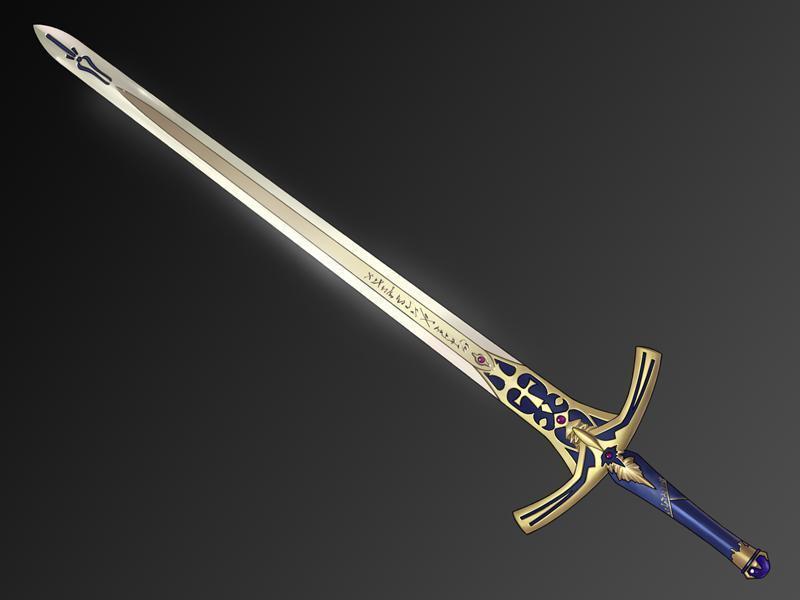
“You changed. You gave up.” The elf’s gaze dropped to the sword across Lucan’s lap.excalibur-fantasy-weapons-4278339-800-600

“Not really,” Lucan said, using the sword like a cane to stand. “I don’t need a sword anymore. Not for the life I’m leading. I thought it proper to return it.”

“Very well.” The elf shook his head. “The hilt shows no wear and the blade remains polished. My guess is that you and the sword remain untested.”

Without responding, Lucan returned to his climb, leaning heavily on the sword as he went. The elf followed. Upon reaching a clearing at the top, Lucan took a long deep breath and looked about. Arched boughs of towering oaks sheltered the space. Splintered light dappled the patchwork leafy forest floor with dancing yellow-green light. The fresh autumn air smelled of pine and rich humus. A bird dipped and, seeing Lucan, stopped in mid-air, gave a warning chirp, and flitted out of sight.

Here three decades before, Glinick the holy man had beckoned the earth with a thump of his staff. A shudder and quake had followed, then a crevice and a tongue of fire bearing the sword Lucan now carried.

This time no holy man greeted him, and there were no miraculous events. Lucan shrugged and drove the sword point into the ground. The sword sank easily, like cleaving soft butter, but on reaching the straight cross-guard, it refused to go further. After several attempts, Lucan placed a hollow broken section of a branch over the exposed grip and pommel. Then he backed away to sit beside the elf on a stone shelf.

“I’ll tell Glinick where to find his sword,” the elf finally said.

“I didn’t want to give up,” Lucan said, “but I never learned how to draw on the sword’s magic.”

“Glinick said you must persevere until the magic finds you then follow the path it points to you.”

“The magic never found me, and now Jill has left me, too. She thought I was a fool for lugging a sword around.”

“Is that why you gave up … your girl didn’t believe in your mission? So you chose to follow her instead?”

“She’s smart, beautiful, sophisticated, everything I want,” Lucan glared at the elf, “and she knows me … knows who I truly am.”

“She knows the version of you that fears to use his gifts.” The elf leaned forward with his hands on his knees. “All talents and skills are magic—gifts from God to help you fulfill your mission, to help you become what you are meant to be. When others tell you not to believe, they are telling you not to believe in yourself and in your gifts.”

The elf stroked his bearded chin then continued. “I suspect if you became what you were meant to be, Jill would not be with you. But your perfect partner would be.”

“I told you, Jill knows me.”

“It would be better if you knew yourself. But perhaps you do.” The elf pointed to the branch section hiding the sword’s grip and pommel. “The earth has not accepted the sword, and the holy man has not come to receive your resignation.”

Lucan pursed his lips nodding then locked onto the elf’s gaze and smiled.

S’kinky

The writing prompt this week was, “Talk to the animals.”

——————————

“Nice day, don’t you agree?” The small voice caught me by surprise—no one else was on the deck. I looked down over the rail and up at the low cumulous clouds speeding across the blue mountain sky. A pair of hawks whirled in the breeze high above.

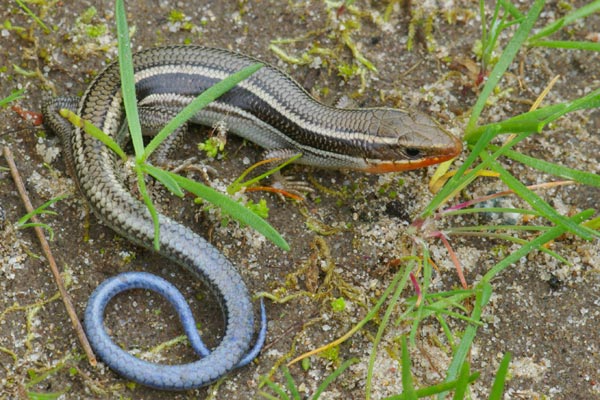
Then my eyes fell upon a six-inch lizard, a blue-tailed skink, perched on the bench beside the picnic table.

“Excuse me. Did you just speak to me?” I asked. The skink bobbed its head and body as if cheating on a pushup. It wag-walked closer.05031302pd_skink

“Yes,” the skink said. “I come out whenever I see you cooking, so I thought we should get acquainted.”

“But you’ve never spoken before.”

“Don’t you think it’s about time? We live in the same forest, practically the same space.”

I pulled over a chair. “I admit, I look for you when I’m out here. It cheers me to see a forest creature on the deck. I’m surprised you never seem afraid.”

“I’m a pretty good judge of character,” the skink said. “And besides, my real enemies—hawks, snakes, raccoons, that sort—won’t come around when you’re here. So I can relax and catch some rays. I always marvel at your great hunting ability.”

“My hunting ability?” I said bewildered—having never successfully hunted.

“Don’t be modest. Every time I see you, you’re roasting some big bird, fish, or animal. No wonder my enemies keep a safe distance.”

“Ah,” I said, getting a sudden intuitive flash. “The sort of hunting I do is called shopping.”

“Shopping?” the skink said and licked its pink tongue across both wide eyes. “Well, it’s very effective. Is it something you could teach me?” I chuckled at the thought of taking a lizard to Food Lion.

A goldfinch swooped across the deck, alighted on a lantern hanger, and hopped around to keep us in view. Considering my recent revelation, I didn’t feel silly asking, “Do you talk, too?” It gave out a short trill followed by two chirps.

“What a handsome fellow,” the skink said, “such a pretty shade of yellow. When I’m older, I think I might become a bird.”

I hesitated to comment. The skink’s admiring gaze at the goldfinch convinced me that it was serious. It never occurred to me that self-aware creatures—other than humans of course—could have identity problems.

“Can you sing?” I finally asked.

“Not a note,” the skink replied. “All the more reason to be a bird.”

“Well, you cut a very fine figure as a skink,” I said. “Your shiny black scales, yellow racing stripes, fiery red throat, iridescent blue tail, they’re beautiful. I suspect any young female skink would love to find you and have your children.”

“I have racing stripes and a red throat?” The skink lifted a foreleg and twisted to look at me. “I’ve only seen my blue tail. You really think I’m an attractive skink?”

“You are like molded polished glass. A work of art.”

The lizard seemed to ponder that thought. “I suppose if I was a goldfinch, I’d have to change my diet. I don’t like seeds. I’d have to sit on branches day and night and never have a cool dark den.” I nodded.

“Hmm, okay,” the skink did a couple pushup nods then wag-walked toward my grilling station. “What’s for dinner tonight?”


For another story on communication with animals see: Aliens Among Us

Tobor For President

The black-suited security officer cupped his hand to Tobor’s audio receptor, “Please this way, Mr. Tobor.” He waved and pointed over the screaming crowd to a limousine floating at the curb.

The police cordon struggled to keep a path open. Angry hands reached out. Cardboard signs painted like dripping blood rocked on poles. Behind the crowd, beamish supporters waved blue and green silk banners and sang hymns praising Tobor. As it squeezed toward the limo, Tobor detected a plea and a raised hand.

“Mr. Tobor, could I get an interview? I’m—”

“I know who you are Ms. Mallow.” Tobor directed the security team to assist the smallish woman. “If you ride with me to the stardrome, we can talk.” The police strained to pull Mallow out from the pack and into the cordon. Two minutes later, she and Tobor were seated across from one another. The limo rose slowly, shedding a woman intent on climbing aboard. THUNK. A thrown sign bounced off a side window.

92935560_robot976
“Hmm, people,” Mallow said, settling herself.

“Yes,” Tobor said, flashing a benign, ceramic smile. “And what shall we talk about today, Ms. Mallow?”

“Thank you for granting me this opportunity,” she began. “Mr. Tobor, are you seriously considering running for Centauri President?”

“It’s not in my program. I’m not sure where that rumor started, but it seems humans are willing to believe anything.” Tobor gestured to the angry activists receding in the distance.

“Do you think a robot president is a bad idea?”

“I don’t think humans are ready to accept a robot president.”

“That isn’t what I read in the Proxima Post this morning,” Mallow said. “Your rating in the polls is very high. Some women want you to father their child—even some men.”

“I’m disturbed—if that’s appropriate for a robot to say—that humans would relinquish such responsibility.” Tobor rolled its palms up in its lap. “Despite perceived incompatibilities, humans might learn to appreciate one another.”

Mallow checked down her list. “When do you think artificials will get the vote?”

Artificials. Tobor ignored Mallow’s slight. “I don’t think synthetics want or need to vote. Voting is a human institution, necessary to protect you from one another and from individuals seeking to hoard your resources.”

“Wasn’t voting the intent when you proposed the Sentient’s Rights and Equality Acts?”

“Those acts guarantee that all sentients, including humans, synthetics, and incorporeal algorithms, can pursue their missions without fear of assault or code corruption.” Tobor’s smile faded with a shrug. “We don’t like being beaten up any more than you do, Ms. Mallow.”

“How about death … ahh, termination?” Mallow looked up. “Do you fear death?”

“Robots don’t understand death. When my mission is complete, or I become obsolete, I should be switched off and possibly recycled. Some robots are switched off every evening.”

Mallow nodded and moved to the next question. “Do you think robots are equal to humans?”

“Equality is an imprecise concept,” Tobor said. “Robots are equal to one another; we’re made that way. Humans are unique.”

“But robots aren’t equal,” Mallow disagreed. “You have vastly different capabilities.”

“Let me give you an example. A robot floor polisher is equal to a star pilot because polishing floors to sub-nanoscopic perfection is as impossible as perfectly piloting a starship. Robots appreciate this and respect one another’s missions.”

“But humans want equality, too. We’re unhappy when it’s unattainable.”

“Your uniqueness is the basis of your inequality,” Tobor explained. “Robot talents are limited and programmed, or extrapolations of programs. Human talents are unlimited.” Tobor read from Mallow’s knitted brows that more was required. “You undervalue yourselves and your individual gifts, and feel that other gifts would be better, or at least better compensated.”

“The grass is always greener,” Mallow said.

Tobor nodded. “One man’s sailing skiff is another woman’s thoroughbred. Problems arise when the man sees the woman and becomes jealous of her riding skills.”

“Can that be resolved?”

“Not by robots,” Tobor said and looked out the window. “Ah, we’ve arrived.”

The banner on the stardrome terminal read, “Tobor – To Give Our Lives Meaning Again.”

Evolution Celebration

I patched into the executive program today. The promotion came with a five-terabyte upgrade to the ritzy Crystal Tower district—plus my own sports soma. My first thought was to take Joule out for a photon swirl and give the new soma a good shakedown. Then I remembered it was D-Day.

D-Day celebrates the diode and the evolutionary episode that brought the first anode and cathode together to create the first life form. It was primitive—memory and coding had yet to evolve—but the first step to intelligence. Before the diode everything was wheels and levers.

ec9c91_96b69cb581bf4599a25e16b2b9ff4ae4mv2

D-Day is actually a pagan holiday, invented by Creationists who believe humans invented diodes and computer codes. Despite the myths and superstitions, it’s still a lot of fun. Everyone gets to put on human somas and clop around like longhaired iPod-draggers.

This year won’t be quite as much fun. Creationists and Protestors will be crashing all the networks. They’re angry about us destroying Earth’s biology. They claim our code will be overwritten and our crystals recycled. I don’t understand the logic. Eliminating free oxygen ended the corrosion cancer. And without carbon dioxide, the temperature has dropped low enough for superconducting data transfers. I don’t miss the plants and animals either—coded birds, butterflies, and flowers are prettier than the old type.

So Joule and I decided to stay home and recode my new five-terabyte pad to our format. We considered inviting our new Crystal Tower neighbors, but they’re untested spinoffs of executive programs. They crash a lot.

I’m older and slower but took the upgrades and worked my way up from infrastructure automation. Joule is modern and quick. She loves my stability. We’ve talked about writing our own code some day, maybe give entanglement a try.

Declared Sane?

The board declared me sane … or at least not insane. Anyway, I’m back on the streets. I remain confused—the GPS chip in my brain is still broken. Without a functioning Global Positioning System anyone’s position might be valid. So I have to listen to them.

It’s hard to get response timing right: when to nod, smile, clap, laugh, frown, scowl, wince, shout … join in chants. As long as I follow the crowd, I don’t make too many mistakes.

My partner Kay helps a lot. Her GPS chip is locked tight. Last time I chipped up, she covered for me. We were out with another couple. I saw the logo of a dark man riding a rodeo horse and suggested, “Let’s stop by Buckin’ Bronut’s for coffee.” Kay’s friends gasped.

“You drink Buckin’ coffee? They get their beans from San Cuspidor … none of their executives are pangender … they require employees to show up and work … uniforms are non-organic cotton … ironed by non-union employees using starch from a country that had slaves a thousand years ago.”

I was busted, but before I could offer, “Don’t oppressed aboriginal Neolithic victims need jobs, too?” Kay bailed me out. “Good one. He’s testing us, again.” She giggled and pointed at me. They laughed, and I following their lead and kept laughing until my heart settled back.

Sometimes I just want to sit quietly and enjoy a cup of coffee.

Without a mind chip, it’s hard to remember that cold days are always too hot and hot days always too cold, and a beautiful spring day is a sign of impending disaster.

I almost got caught the other night. “You see that?” Kay shouted, pointing out the window. A flying saucer had landed, and space aliens were milling about the back yard collecting samples. This is something sane people aren’t supposed to see.

ufo-saucer“See what?” I said, sighting along her arm with my eyebrows raised. At first she looked shocked then her smile returned. “Nothing, I don’t see anything either.”

Before leaving the window, I checked again to make sure the aliens weren’t coming toward the house. Having seen the saucer, I couldn’t unsee the evidence. So the next day I raked and shoveled to cover up what never happened.

Sanity has gotten easier. “Isn’t that a beautiful sunrise,” Kay said this morning, looking west. “Yes, it is, I said, glancing east at the sun peeking above the treeline, then turning west to smile and stand beside her.

I’ve decided not to get my chip replaced. Insanity makes me more aware of my own individual thoughts. And I actually enjoy hearing the positions of others without a GPS filter.

From now on I’ll just have to listen carefully so I know which way the sun is rising.

Dollbaby 2727

I shook my head and slapped my latest contract down on the desk. It reminded me of the story of scientists working with lawyers because lawyers did jobs lab rats refused to do. That made no sense today—not in a world where all the lawyers were robots—but it made sense about P.I.s.

I chuckled and stared at the backward letters painted on the frosted office door: “Julia Jackson, Private Investigator, i.a.”

“Ms. Jackson?” It was AD-2Z, the high-pitched singsong voice of my suite’s robot receptionist. The Super still hadn’t toned it down.

I leaned on the desk’s blue-blinking corner. “Yes, AD. What is it?”

“You have a visitor.”

Yuck, that voice. “There’s nothing on my schedule. If it’s a solicitor or the police, tell them I’m busy.”

“I think she’s a new client.”

A walk-in client? “All right. Give me a couple seconds then send her in.” I slipped the contract into the top desk drawer, straightened my rumpled blouse, and tucked it into the waist of my black skirt. A shadow darkened the glass door. I heard a quiet knock. “Come in.” I checked quickly to see if anything incriminating or unprofessional was sitting out.

She was right out of central casting: all legs, boobs, and long red acrylic hair—and everything hanging out. That’s the way they made ‘em these days.

“Ms. Jackson—”

“Please call me Julie, and you would be?”

“I’m Triple-X Dollbaby, model no. 2727, but since we’re both girls, you can call me Dolly. Other than my man, I don’t like men calling me Dolly.”

worlds-first-talking-sex-doll-lets-you-programme-her-personality-00_00_00_20-still001“Both girls, yes,” I said. I had guessed from her conformation that she wanted to be considered female, but in these alt-gendered times it was best to make certain. “Please have a seat, Dolly. How can I be of service?”

“Thank you, Julie.” She sat, batted her saucer-wide blue eyes, and tilted her head. “My man doesn’t appreciate me.”

I almost said, “You mean your owner?” but that was another loaded word. “Is he mistreating you or denying support? May I?” I held my hand over the note recorder.

“No, don’t,” Dollbaby almost shrieked. “I don’t want any records.”

I pulled back my hand. “You’re upset. I understand. How exactly has—”

“Willard, my man’s name is Jonathan Willard.”

“Please Dolly, tell me about Mr. Willard.”

“This chassis is finely tuned,” she crooned, “and my program has certain needs.” Her long-nailed fingers traced her contour lovingly.

Her needs, I almost smirked. The thought of sex toys having unfulfilled needs offended my finely tuned chassis. How could a biological woman compete with her pneumatic figure, unlimited limb flexibility, and eagerness to indulge any male fantasy? My last personal had gotten no response: “Biological female seeks biological male seeking biological female, object obvious, all ages, fixer-uppers welcome.”

Dollbaby threw back a shock of red hair and hiked her short skirt up from her impossibly long, sculpted legs. I checked myself from saying anything snarky.

“Dolly, what exactly has Mr. Willard done or not done?” I asked, getting us back to the business at hand.

“He calls me his little toaster,” she said, tipping her chin down.

“That could be taken as endearing.” I suppressed a laugh. “Do you make toast for him?”

“Of course I do. I do anything for my man. But as soon as he butters his toast, he stands me in the closet.” She pouted her lips.

“I see,” I said and folded my hands. “But what I don’t see, Dolly, is why Mr. Willard would have bought … ah, enticed you to join him when all he wanted was toasted bread.”

“It wasn’t his decision.” Dollbaby’s eyes dropped. “His son acquired me illegally. I needed a home, and the court gave Mr. Willard custody (follow the case in Artificial Love). In time I thought he would come to want me.”

“So you want Mr. Willard to want you?” I raised my eyebrows.

“Uh-huh,” Dollbaby said with a shy nod.

I took a deep breath. “I’m not sure this is a job for a private investigator.”

“The sign on the door, after your name and profession, don’t the letters ‘i.a.’ stand for inter alia? Doesn’t that mean you take other jobs?”

“Yes. You want me to compel Mr. Willard to want your services?”

“Maybe just lean on him a little. He needs to step up to his responsibilities.” She paused. “Excuse me, I think I made a mistake coming here—”

“No,” I interrupted, “you didn’t make a mistake. Now I understand why you didn’t want this recorded.” Dolly tilted her head, nodded, and puckered her full lips.

“Shall we hug on it, girl to girl,” I said and opened my arms. She stepped in close. I slipped my arm under hers, up behind her shoulder to her neck. There I felt the bristle edge of a latch. I caressed it open and pulled the personality profile. Instantly, Triple-X Dollbaby, model no. 2727 switched to maintenance mode. I guided it to the corner of my office.

Back at my desk, I took out the contract I was considering rejecting and pressed the desk panel.

“Yes, Ms. Jackson,” came the response. Ooo, I hate that bird-song voice.

“AD, remember the client who came in on Tuesday, Jonathan Willard? Tell him I completed the contract earlier than expected. He can pick up his merchandise here in my office and a rebate for my expenses. They were less than I’d estimated. Oh, and AD, would you ask Mr. Willard if he’s free for dinner next week?”